
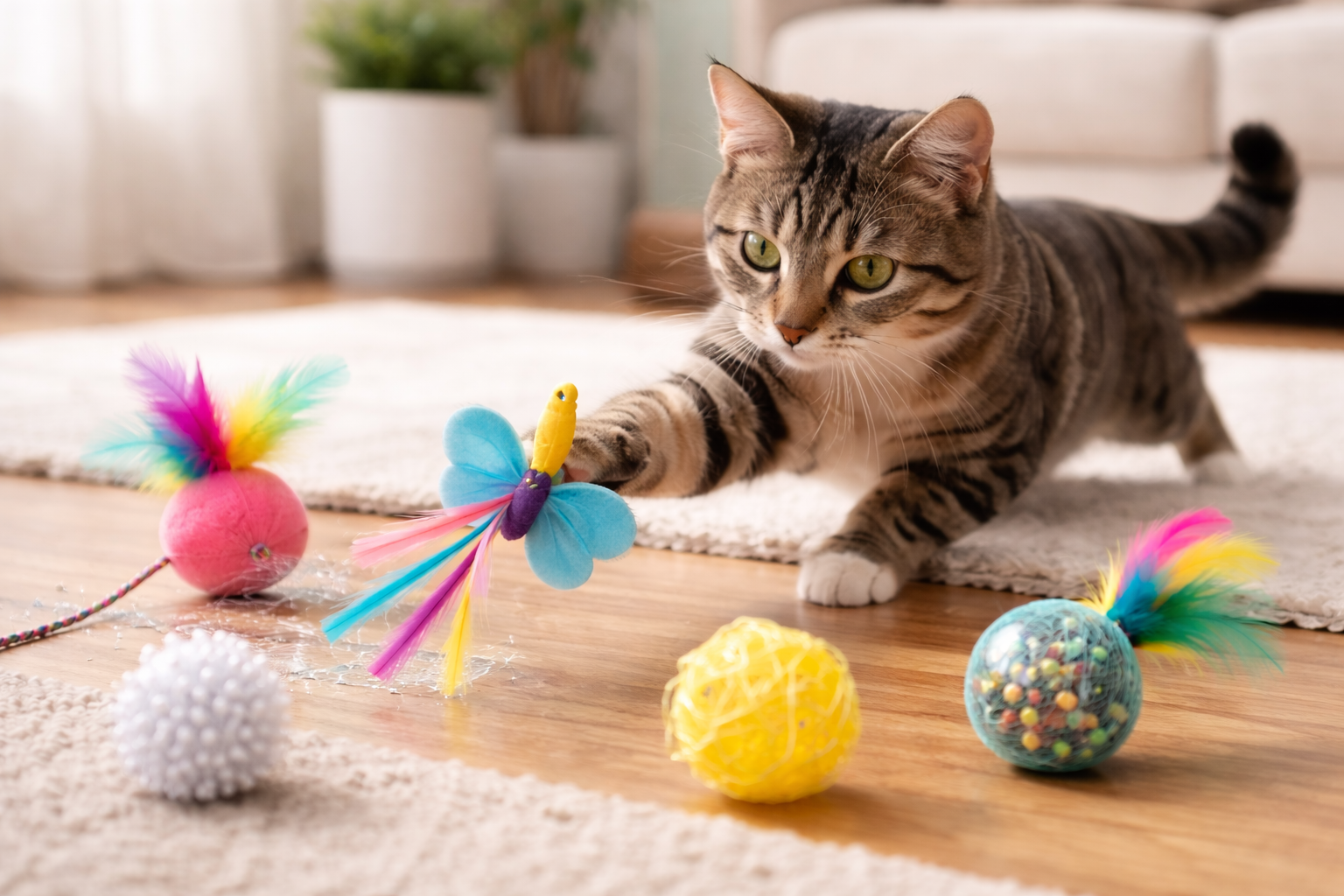
Cats are naturally curious, agile, and highly sensitive to movement. When it comes to play, the way a toy responds often matters more than how it looks. In recent years, many pet owners and brands have noticed that toys requiring less force to move tend to hold feline attention longer. This is where lightweight cat toys have become an essential part of modern feline enrichment, offering responsive play experiences that align closely with a cat’s natural hunting instincts.
Unlike heavier toys that rely on size or mass, lighter designs respond instantly to small paw movements, subtle bites, or airflow. This immediate feedback keeps cats engaged, encourages repeated interaction, and supports both physical activity and mental stimulation throughout the day.
Cats are efficient hunters by nature. In the wild, prey reacts quickly, often with unpredictable motion. Lightweight cat toys replicate this experience by moving easily across floors, fluttering through the air, or bouncing with minimal contact. Even a gentle tap can send a lightweight toy skittering away, triggering chase behavior and sustained focus.
This responsiveness is particularly important for kittens, senior cats, or indoor cats with lower activity levels. Toys that feel effortless to control reduce frustration and make playtime more accessible, reinforcing positive engagement rather than fatigue or disinterest.
Play is not only exercise; it is cognitive stimulation. Lightweight cat toys support both by encouraging problem-solving, coordination, and timing. Because these toys react quickly, cats must adjust their movements, judge distance, and anticipate direction changes, all of which contribute to mental engagement.
Physically, lighter toys promote repeated bursts of movement rather than short, exhausting sessions. Cats are more likely to return to a toy multiple times throughout the day when it does not require excessive effort to activate. This pattern aligns well with a cat’s natural energy cycles and helps prevent boredom-related behaviors.
 Material Choices That Support Lightweight Design
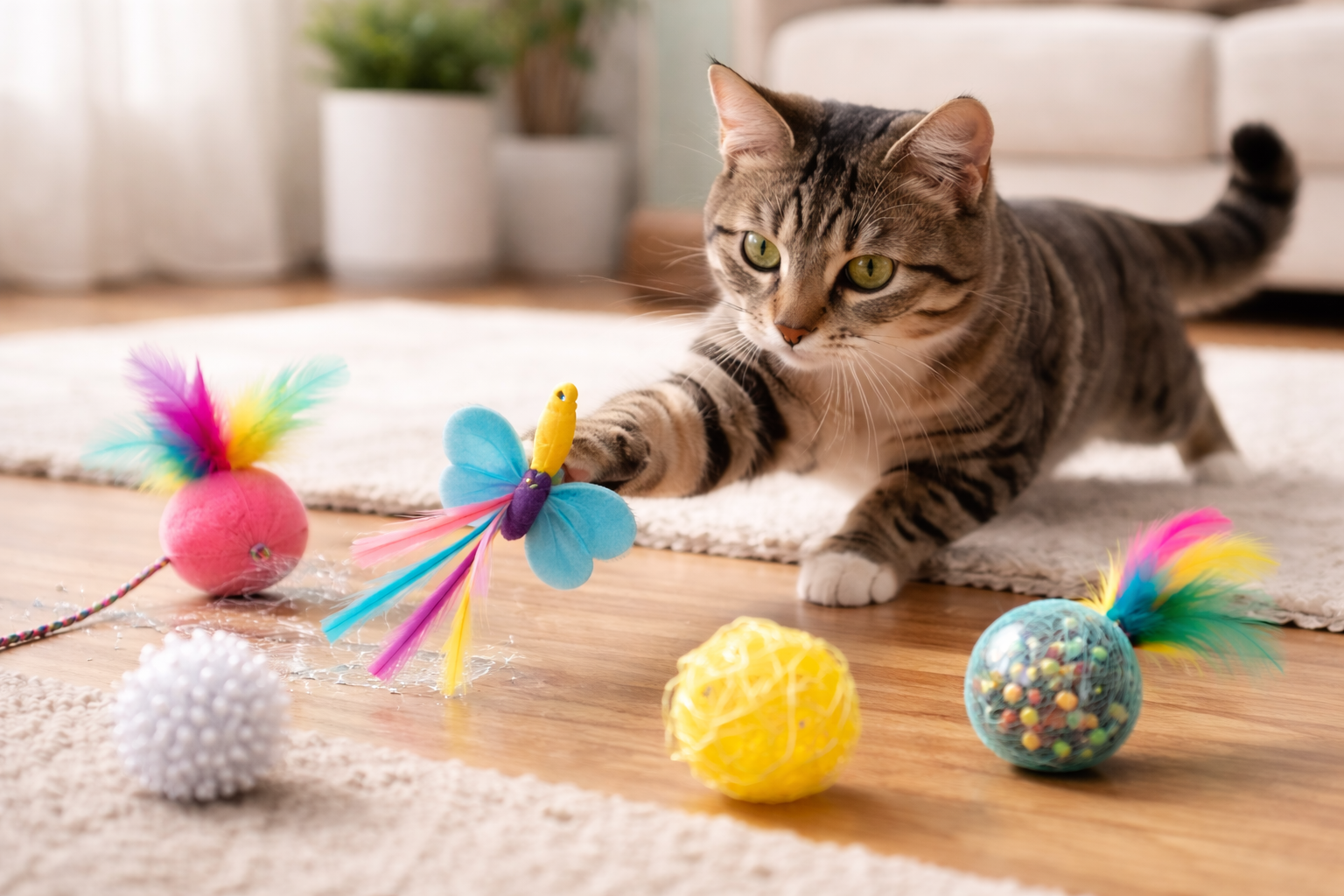
The effectiveness of lightweight cat toys depends heavily on material selection. Common materials include nylon, mesh fabric, felt, thin EVA foam, crinkle film, and lightweight plastics. These materials allow toys to maintain structure without adding unnecessary weight.
Manufacturers often combine multiple lightweight elements to enhance sensory appeal. For example, a nylon ribbon paired with crinkle material can produce both visual movement and sound without increasing mass. This layered approach improves engagement while preserving the core benefit of easy motion.
Not all cats play the same way. Some prefer fast-paced chasing, while others enjoy batting or carrying toys. Lightweight cat toys are versatile enough to support multiple play styles.
For energetic cats, lightweight toys attached to wands or elastic cords create dynamic, airborne movement. For more relaxed or cautious cats, small, lightweight floor toys encourage gentle batting and exploration. Cats recovering from illness or adapting to new environments also benefit from toys that feel unintimidating and easy to control.
Modern households often look for toys that work both with and without human involvement. Lightweight cat toys excel in this area. When used in interactive play, minimal wrist movement can generate dramatic motion, making play sessions enjoyable for owners as well.
For independent play, lightweight toys placed on smooth surfaces can move with airflow or minor contact, allowing cats to initiate play on their own. This makes them ideal for short self-play moments during the day, especially for indoor cats.
From a product development perspective, lightweight cat toys offer clear commercial advantages. Reduced material usage lowers production and shipping costs, which is especially valuable for wholesale and international distribution. Lighter products also allow for higher quantities per shipment, improving logistics efficiency.
Customization is another advantage. Lightweight designs are easier to adapt into different shapes, colors, and themes without reengineering the entire product. This flexibility makes lightweight cat toys well suited for private-label programs, seasonal collections, and replacement accessories.
While lightweight does not mean fragile, proper construction is essential. High-quality lightweight cat toys are designed to withstand repeated batting and chewing without breaking apart. Smooth edges, reinforced stitching, and secure attachments help ensure safety during play.
Regular inspection and simple cleaning routines further extend product lifespan. Because many lightweight toys use moisture-resistant materials, maintenance is generally straightforward, which adds to their appeal for pet owners.
As awareness of feline enrichment grows, so does demand for toys that prioritize function over bulk. Consumers increasingly understand that cats respond best to movement and interaction rather than size alone. This shift has positioned lightweight cat toys as a key category within both mass-market and premium pet product lines.
Their adaptability, affordability, and effectiveness make them a reliable choice for brands seeking long-term relevance in the cat toy market.
Tel: Phone / WhatsApp: +86 13718368168
Email: Email: info@fukapets.com

 KR
KR JP
JP EN
EN