
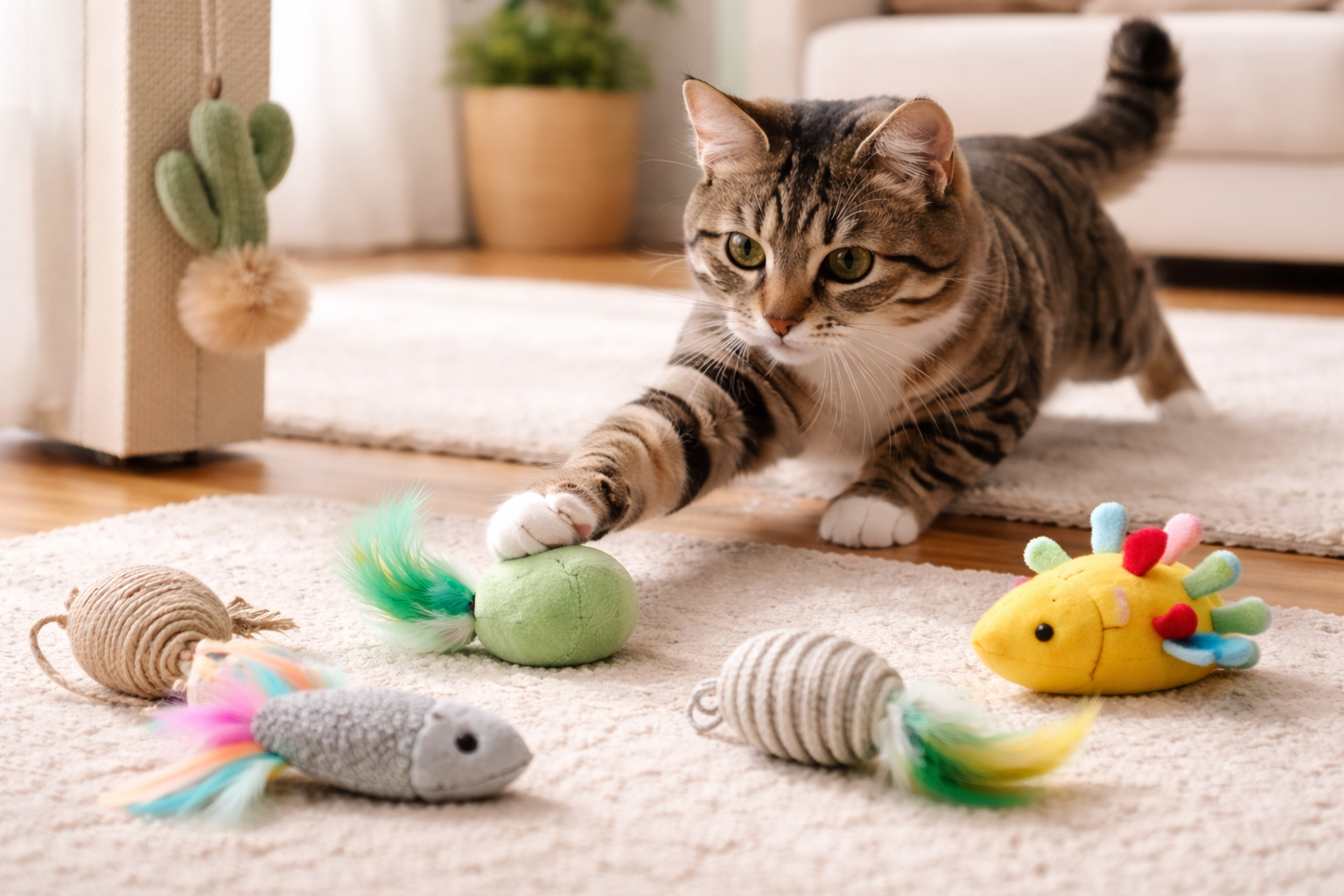
Noise sensitivity is becoming an increasingly important factor in modern pet households. Many cat owners live in apartments, work from home, or share spaces where constant sound is disruptive. In these environments, toys that stimulate cats without creating noise are especially valuable. Designed to meet this need, silent self-play toys for cats provide engaging enrichment while maintaining a calm and peaceful home atmosphere.
Unlike traditional toys that rely on bells, rattles, or crinkle sounds, silent designs focus on movement, texture, and balance. These toys allow cats to play independently without disturbing people nearby, making them ideal for daytime use, late-night play, or homes with light sleepers.
Cats are naturally quiet hunters. In the wild, stealth is essential, and excessive noise can disrupt focus. Silent self-play toys for cats align more closely with this instinct by offering subtle, controlled stimulation rather than loud auditory cues.
From a human perspective, silent toys reduce background noise during work hours, video calls, or rest periods. This makes them especially appealing to urban pet owners and households with shared living spaces. As awareness of these benefits grows, demand for silent self-play toys for cats continues to increase.
Self-play toys must balance engagement with calmness. Toys that are too loud or chaotic can lead to overstimulation, stress, or avoidance. Silent self-play toys for cats encourage steady, focused interaction instead of frantic play.
These toys often rely on gentle rolling, slow rebounds, or resistance-based movement that responds to a cat’s touch. This allows cats to control the pace of play, supporting confidence and reducing frustration. Independent play becomes a relaxing activity rather than an exhausting one.
 Materials That Enable Quiet Interaction
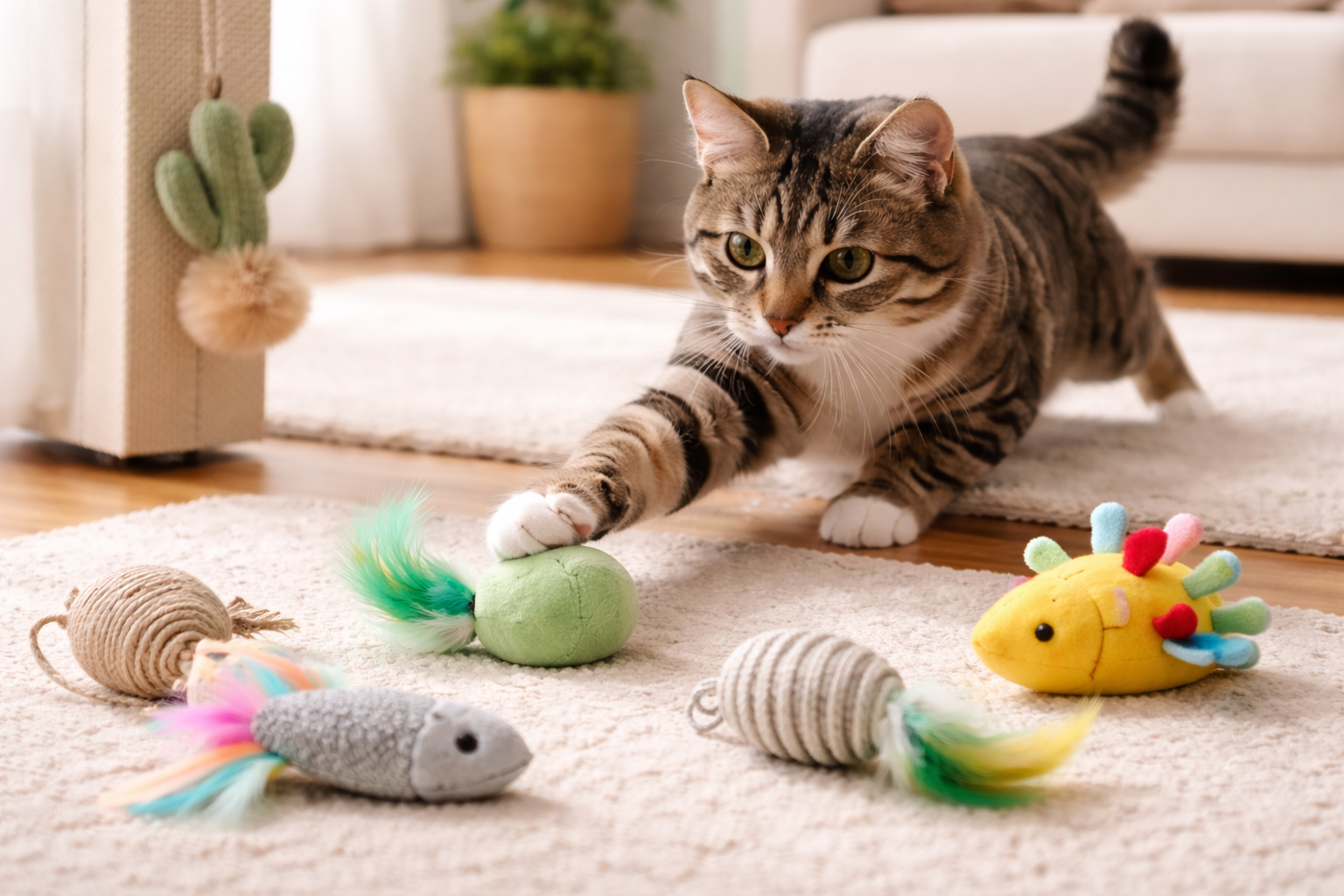
Material selection is critical in the design of silent self-play toys for cats. Soft felt, dense foam, natural rubber, smooth nylon fabric, and weighted bases are commonly used to minimize sound. These materials absorb impact and prevent rattling or scraping noises on hard floors.
Textured surfaces also add tactile interest without relying on sound. Raised stitching, woven fibers, or layered fabrics provide sensory feedback through touch and movement alone. This design approach keeps cats engaged while maintaining a quiet environment.
Several toy formats work particularly well when designed for silence. Floor toys that roll slowly or wobble unpredictably encourage batting and chasing without noise. Hanging toys attached to doors or walls can sway gently, creating visual movement that draws attention without sound.
Puzzle-style toys are another popular option. When designed without internal rattles, these toys challenge cats mentally while remaining quiet. Silent self-play toys for cats in puzzle form are especially effective for indoor cats that need mental stimulation during long periods alone.
Indoor cats often rely entirely on toys for enrichment. However, constant noise can lead owners to limit playtime, reducing stimulation. Silent self-play toys for cats remove this barrier, allowing cats to play freely throughout the day.
In apartments, noise can also affect neighbors. Quiet toys help maintain good relationships in shared buildings while still supporting a cat’s physical and emotional needs. This practical benefit makes silent toys a preferred choice in densely populated living environments.
Consistent, low-stress play contributes to better overall behavior. Cats that engage regularly with silent self-play toys for cats are less likely to develop boredom-related issues such as scratching furniture or excessive vocalization.
Silent toys also support better sleep patterns. When cats can play independently during the day without overstimulation, they are more likely to rest calmly at night. This balance benefits both pets and owners, reinforcing the value of quiet play solutions.
From a product development standpoint, silent self-play toys for cats represent a growing niche with strong commercial potential. These toys appeal to modern lifestyles and can be positioned as premium or wellness-focused products.
Manufacturing silent toys often involves fewer mechanical components, which can reduce defect rates and simplify quality control. Lightweight, quiet designs also lower shipping costs and packaging requirements, making them attractive for wholesale and private-label programs.
Customization opportunities are extensive. Brands can vary shapes, colors, textures, and difficulty levels while maintaining the core benefit of silence. This flexibility allows silent self-play toys for cats to fit into diverse product lines and seasonal collections.
As pet owners become more mindful of both animal welfare and home comfort, the market for quiet enrichment continues to expand. Silent self-play toys for cats meet this demand by offering thoughtful design that respects natural feline behavior and modern living conditions.
Rather than relying on sound to attract attention, these toys prioritize interaction quality. This shift reflects a broader trend toward intentional, well-designed pet products that support long-term well-being.
Tel: Phone / WhatsApp: +86 13718368168
Email: Email: info@fukapets.com

 KR
KR JP
JP EN
EN