
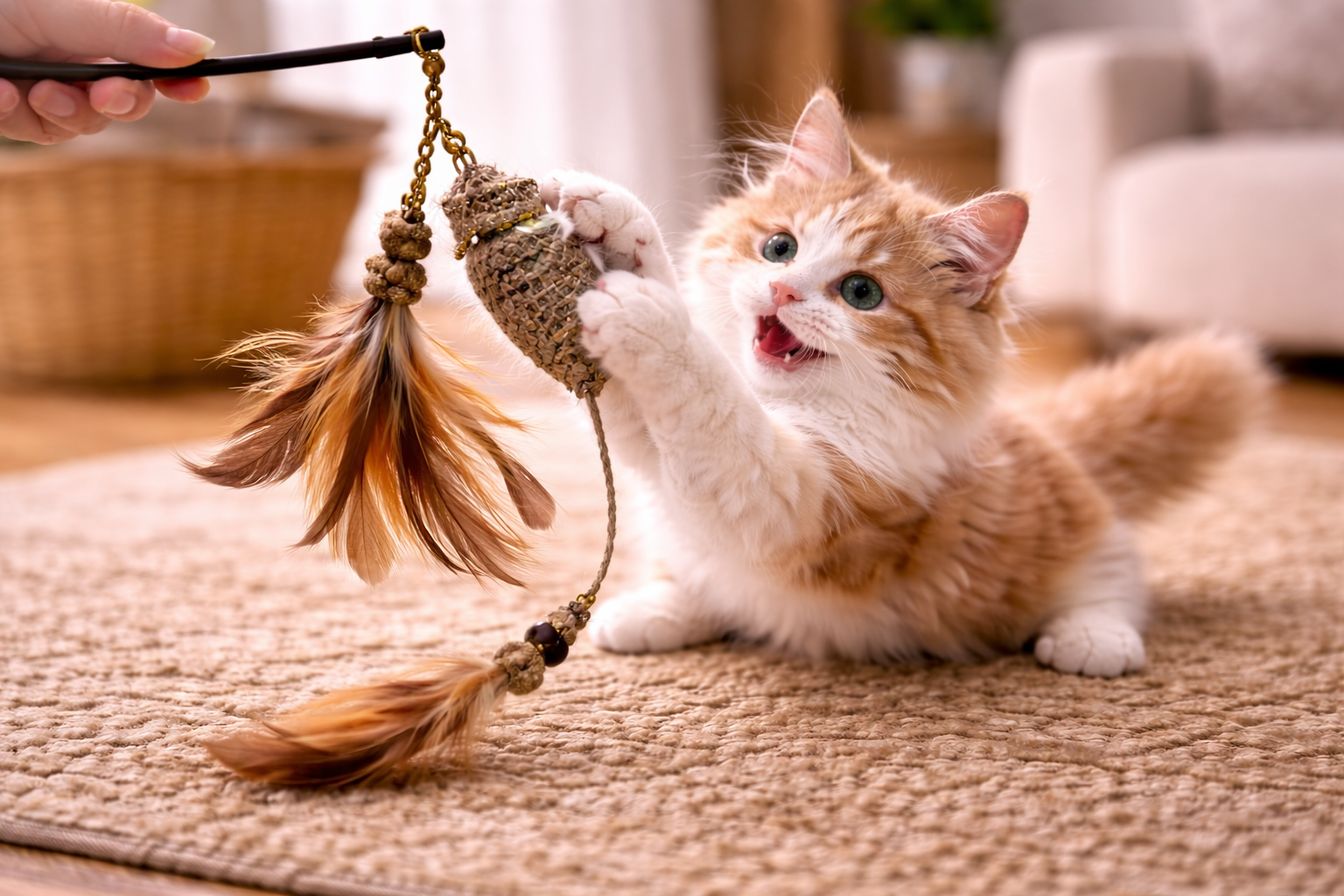
In today’s pet market, cat owners are no longer satisfied with mass-produced accessories that look the same and wear out quickly. They are searching for products that reflect care, creativity, and a deeper understanding of feline instincts. This shift in mindset has brought renewed attention to the handcrafted cat toy, a category that combines thoughtful design with emotional value for both cats and their humans.
Unlike factory-made alternatives, handcrafted toys focus on detail, balance, and interaction. Each piece is created with intention—how a cat stalks, pounces, bites, and carries prey is considered at every stage of production. This approach transforms a simple plaything into an engaging experience that supports a cat’s physical and mental well-being.
A handcrafted cat toy is not defined solely by being made by hand. It represents a philosophy of slow creation, careful material selection, and respect for animal behavior. Artisans often draw inspiration from natural prey such as birds, insects, or small mammals, shaping toys that move unpredictably and stimulate a cat’s hunting drive.
This level of craftsmanship results in toys that feel more “alive” to a cat. Subtle variations in texture, weight, and movement make play sessions longer and more satisfying. For indoor cats especially, handcrafted toys help bridge the gap between instinct and environment.
 Materials Matter More Than Ever
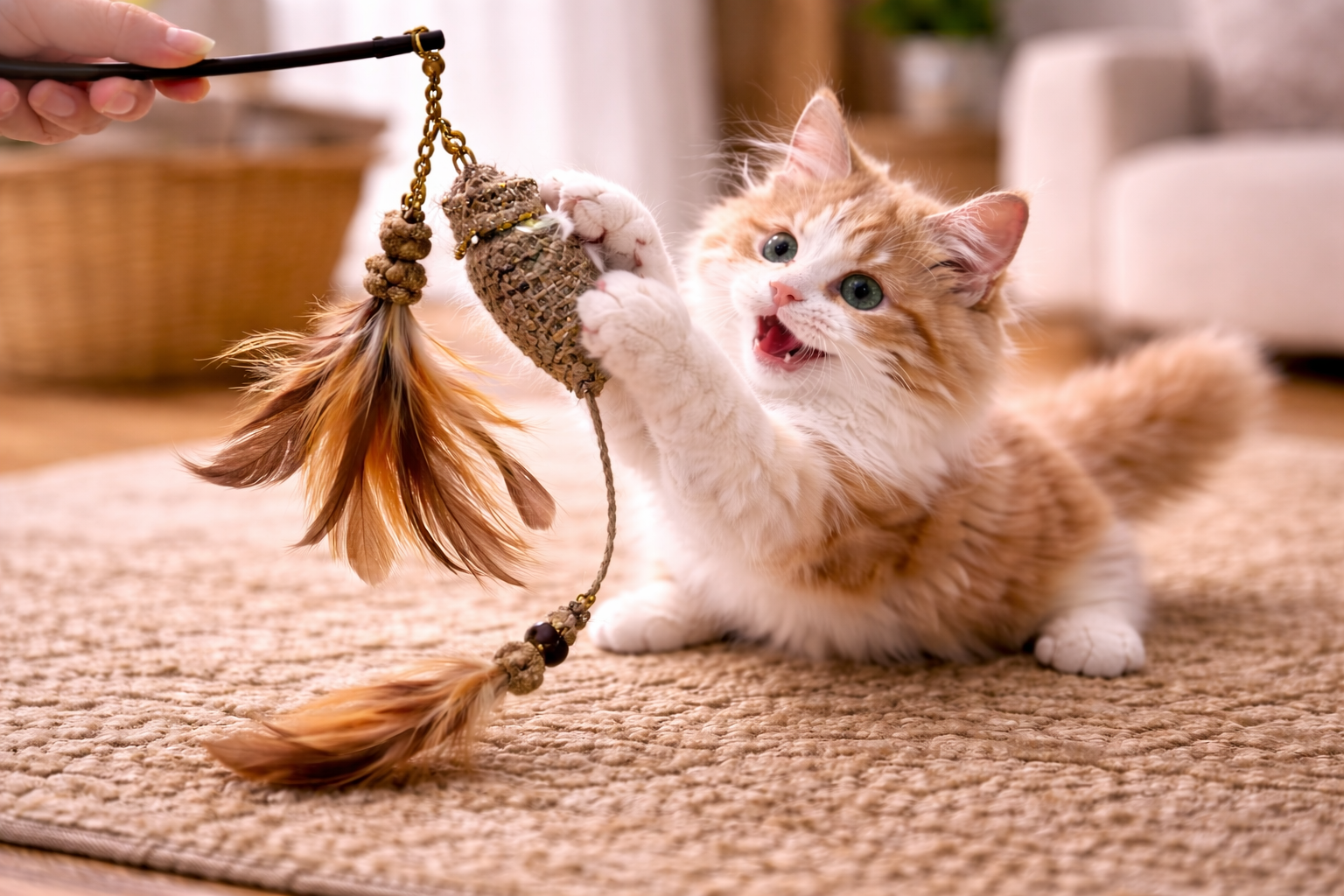
One of the strongest advantages of a handcrafted cat toy lies in its materials. Natural feathers, untreated wood, cotton rope, wool felt, and safe metal connectors are commonly used. These materials not only feel better under a cat’s paws and teeth but also reduce the risk associated with brittle plastics or low-quality synthetic fibers.
Responsible makers prioritize non-toxic dyes and secure assembly. Each knot, stitch, or joint is checked manually, which significantly lowers the chance of parts breaking off during intense play. For cat owners who value safety as much as fun, this attention to detail makes a noticeable difference.
Cats are natural hunters, and successful toys are those that respect this reality. A well-designed handcrafted cat toy encourages the full hunting sequence: watching, stalking, chasing, pouncing, grabbing, and finally biting. Artisans often test prototypes with real cats, refining movement and resistance until the toy responds realistically.
This instinct-driven design helps reduce boredom and destructive behavior. When cats are mentally stimulated through play, they are less likely to scratch furniture or show signs of stress. Over time, regular interactive play also strengthens the bond between cat and owner.
Beyond function, handcrafted toys carry emotional significance. Many pet owners see their cats as family members and want products that reflect that relationship. A handcrafted cat toy feels personal—it tells a story of who made it, why it was designed, and how it should be enjoyed.
For boutique brands and independent sellers, this emotional connection becomes a powerful differentiator. Customers are more likely to remember, recommend, and repurchase from brands that offer authenticity rather than anonymity.
As sustainability becomes a global concern, handcrafted pet products are gaining attention for their lower environmental impact. Small-batch production reduces waste, while durable construction extends product lifespan. Choosing a handcrafted cat toy often aligns with eco-conscious values, appealing to customers who care about responsible consumption.
Many makers also support local craftsmanship and ethical labor practices. This transparency builds trust and adds another layer of value beyond the product itself.
The demand for premium, design-focused pet products continues to grow. Retailers and distributors who include handcrafted cat toys in their offerings can reach a niche but loyal customer base. These customers are typically less price-sensitive and more focused on quality, uniqueness, and story.
For brands, handcrafted lines can coexist with standard products, elevating overall brand perception. They also provide excellent content opportunities for storytelling, social media, and visual marketing.
A handcrafted cat toy is not merely an object—it is an experience shaped by design, instinct, and care. By combining safe materials, thoughtful construction, and emotional resonance, these toys redefine how cats play and how owners choose products.
As pet owners continue to seek meaning and quality in everyday items, handcrafted toys stand out as a lasting and valuable choice in the modern pet industry.
Tel: Phone / WhatsApp: +86 13718368168
Email: Email: info@fukapets.com

 KR
KR JP
JP EN
EN