
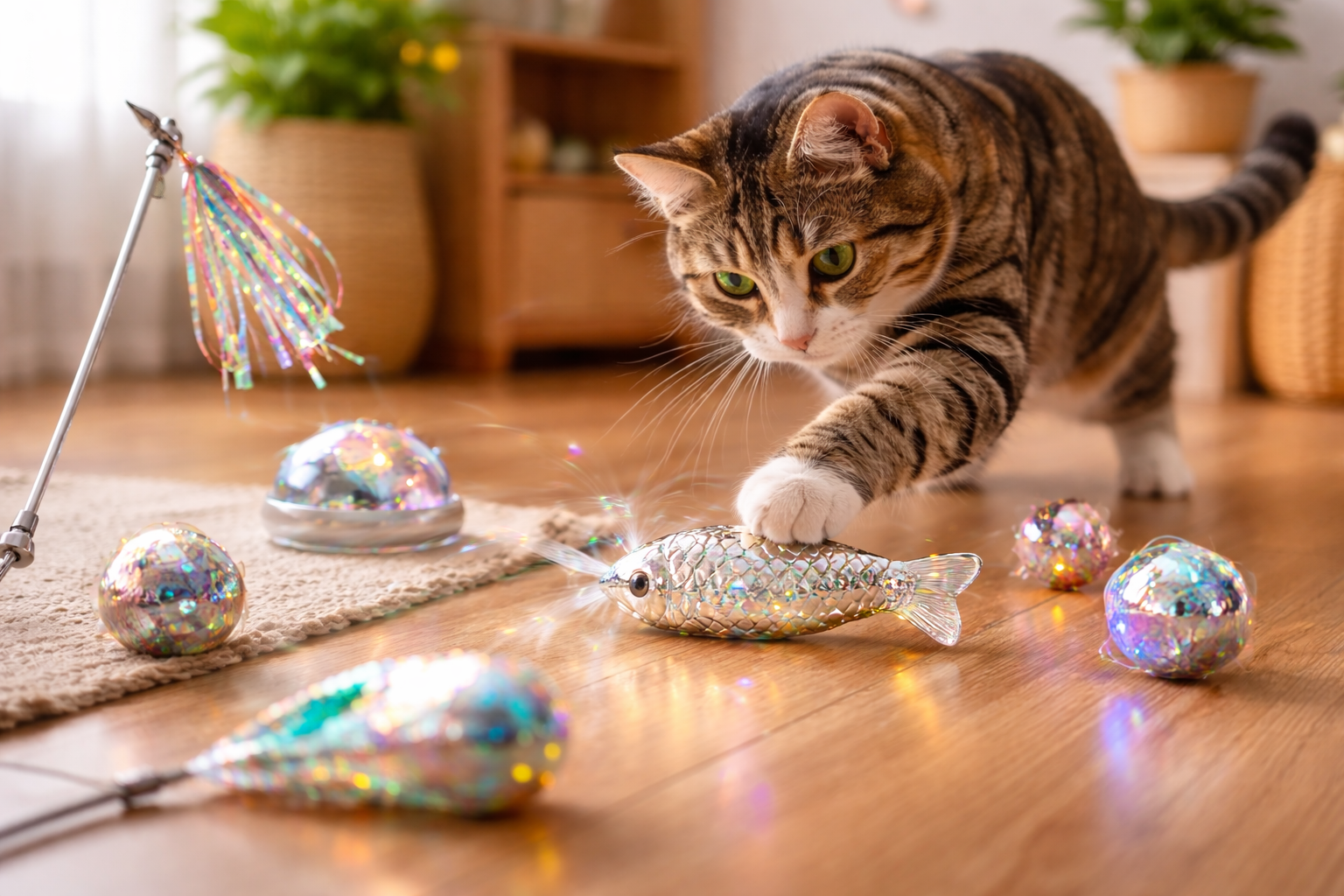
Many cat owners eventually notice the same problem: toys that once excited their cat now sit untouched on the floor. Bells stop ringing, plush mice gather dust, and even catnip loses its appeal. This raises an important question—are conventional toys enough to keep cats mentally engaged long term?
As feline behavior research advances, visual stimulation has become a key focus. This shift has led to increased interest in Reflective cat toys, a category designed to stimulate a cat’s vision rather than relying on sound or scent alone.
Cats rely heavily on vision when hunting. Their eyes are optimized to detect:
Small movements
Sudden light changes
Fast directional shifts
Unlike humans, cats are more responsive to contrast and reflection than to color detail. Reflective cat toys work by exploiting this strength, creating unpredictable flashes that mimic the movement of prey.
This form of stimulation activates the brain before the body, making play more focused and intentional.
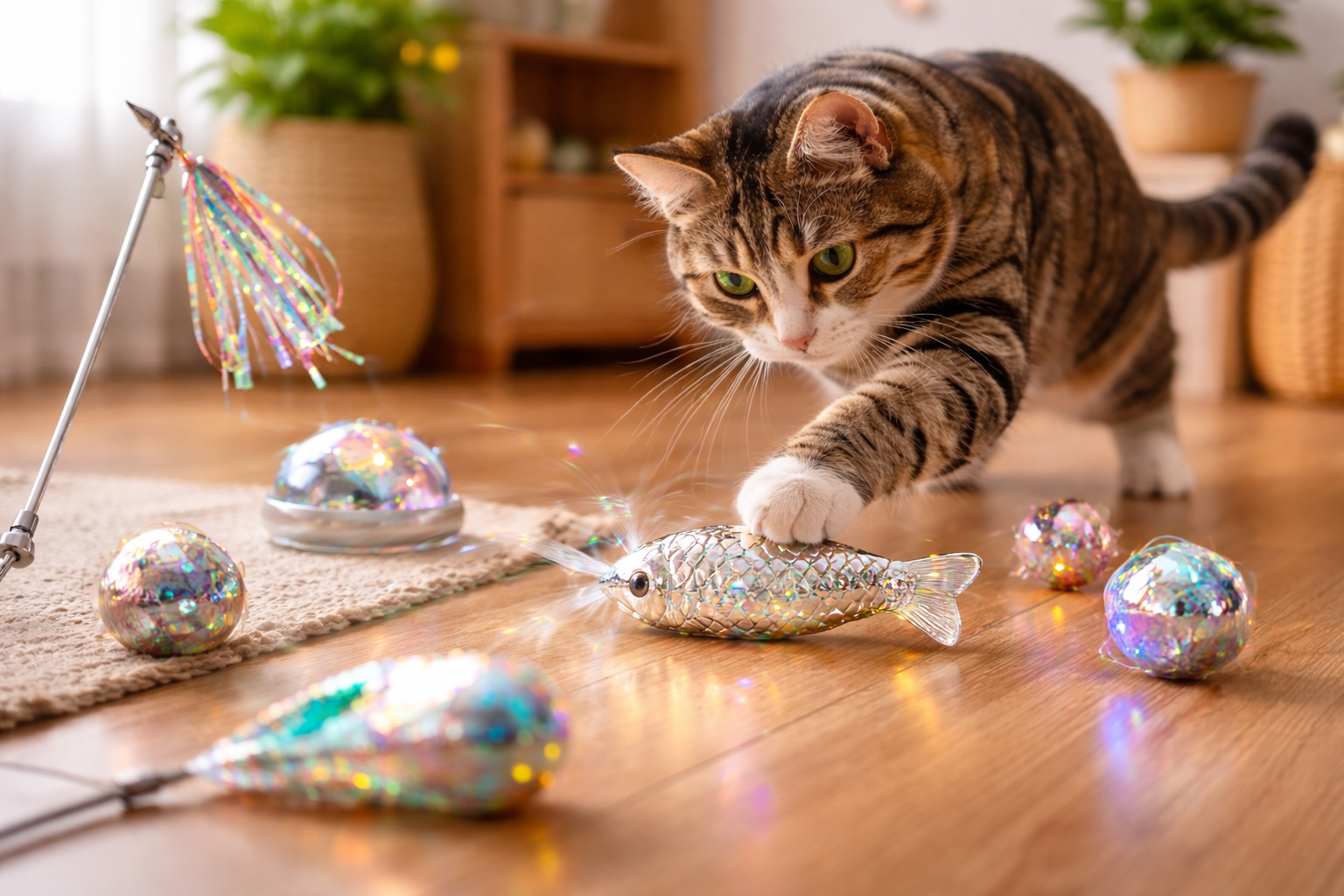 What Problems Do Reflective Cat Toys Solve?
Many cats lose interest in repetitive toys. Reflective surfaces never behave the same way twice, helping maintain curiosity.
Some cats are sensitive to sound. Silent visual toys offer engagement without stress.
For apartments or limited indoor areas, Reflective cat toys provide high stimulation without requiring large movement zones.
Electronic toys often rely on motors, sounds, or programmed patterns. While effective, they can feel predictable over time.
In contrast, Reflective cat toys are passive but dynamic. Their behavior depends on:
Ambient light
Cat interaction angle
Movement speed
This creates a constantly changing experience with no batteries required.
Key comparison:
Electronic toys → programmed stimulation
Reflective toys → environment-driven stimulation
Not all reflective materials are equal. High-quality products usually include:
Holographic PET film
Metallic fabric ribbons
Crinkle layers with reflective coating
Polished, pet-safe plastic surfaces
Durability is essential. Safe Reflective cat toys should resist tearing and avoid sharp edges.
Position reflective toys near windows to take advantage of natural light movement.
Even soft lamps can create enough reflection to trigger engagement.
Hanging or floor-based Reflective cat toys allow cats to self-entertain while owners are busy.
While most cats respond positively, these toys are especially effective for:
Indoor-only cats
Cats that ignore sound-based toys
Senior cats needing gentle stimulation
Easily bored or anxious cats
Because the stimulation is visual rather than physical resistance-based, it suits a wide age range.
Even simple toys require supervision and proper selection.
Choose Reflective cat toys that:
Use non-toxic materials
Have reinforced seams
Avoid glass or sharp mirrored surfaces
Inspect regularly and remove damaged items immediately.
Reflective toys work best as part of a larger enrichment plan. Consider pairing them with:
Puzzle feeders
Vertical climbing furniture
Scratching posts
This combination ensures both mental and physical needs are met, preventing overreliance on a single stimulation type.
One overlooked advantage of Reflective cat toys is longevity. Because they don’t depend on electronics, they:
Rarely break
Require no charging
Stay engaging over time
From a cost-efficiency standpoint, they offer strong long-term value.
Play does not have to be loud or complicated to be effective. By appealing directly to a cat’s strongest sense, Reflective cat toys offer a smart, low-maintenance way to enrich daily life. They solve common play fatigue issues while encouraging natural hunting behaviors in a calm, controlled way.
For cat owners looking to refresh their enrichment strategy, reflective toys provide a simple yet powerful solution.
Tel: Phone / WhatsApp: +86 13718368168
Email: Email: info@fukapets.com

 KR
KR JP
JP EN
EN