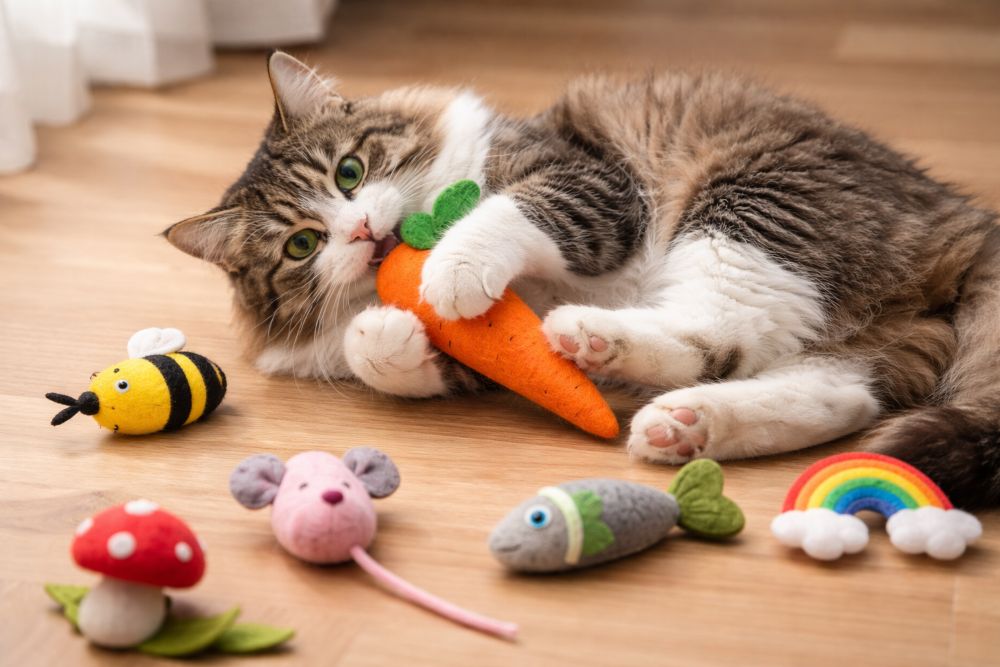
In today’s competitive consumer market, private label felt toys have emerged as a highly attractive product category for brands seeking differentiation, sustainability, and strong emotional appeal. From pet toy brands to children’s gift lines and lifestyle boutiques, felt toys made from wool or eco-friendly fibers offer a unique balance of safety, aesthetics, and customization. By adopting a private label approach, businesses gain full control over branding, design direction, and market positioning while reducing development risks.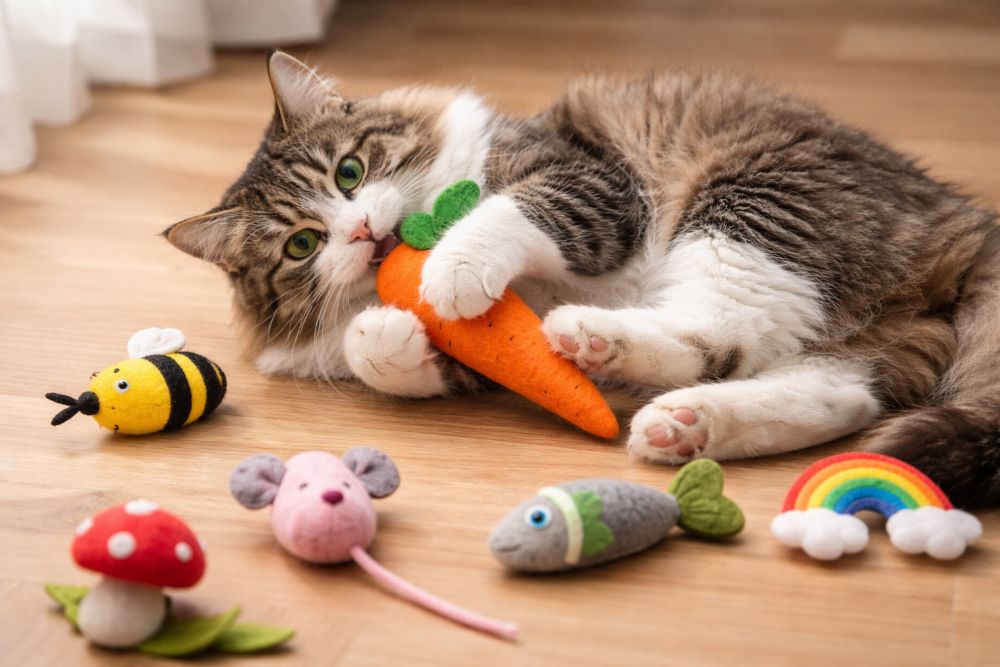
As consumers increasingly value natural materials and responsible production, private label felt toys provide an ideal opportunity to align brand values with real product benefits. This article explores why felt toys are in high demand, how private labeling strengthens brand identity, and what to consider when developing a successful felt toy line.
Felt toys are crafted from compressed fibers—most commonly natural wool felt or blended eco fibers—resulting in a soft yet durable material. Compared with plastic or synthetic alternatives, felt offers a warmer texture, quieter play experience, and improved safety profile.
For pet owners, especially cat owners, felt toys reduce noise during play and minimize the risk of sharp breakage. For parents and gift buyers, felt toys are often perceived as safer, more educational, and visually calming. These characteristics have driven demand across North America, Europe, and Australia, where eco-conscious purchasing decisions strongly influence buying behavior.
By choosing private label felt toys, brands can capitalize on this trend while tailoring products to their specific customer base.
Private labeling allows brands to sell products manufactured by a third party under their own brand name. In the felt toy segment, this approach offers several strategic advantages:
First, private label felt toys enable full customization. Brands can define toy shapes, sizes, colors, stitching styles, packaging, and even embedded elements such as catnip or sound-free fillers. This flexibility makes it easier to create seasonal collections, themed series, or exclusive designs that competitors cannot easily replicate.
Second, private labeling improves brand recognition and loyalty. When customers repeatedly encounter a consistent visual identity and product quality, trust builds over time. Felt toys, with their handcrafted appearance and tactile appeal, are particularly effective at reinforcing a premium or artisanal brand image.
Third, private labeling reduces time to market. Instead of building a manufacturing facility, brands can collaborate with experienced felt toy producers who already understand material handling, safety standards, and export logistics.
One of the strongest advantages of private label felt toys is sustainability. Wool felt is biodegradable, renewable, and often produced using low-impact processes. Compared to injection-molded plastic toys, felt toys generate less environmental waste and appeal to buyers who prioritize green consumption.
Brands can further strengthen this advantage by highlighting ethical sourcing, handmade production, or low-noise and non-toxic attributes. Clear sustainability messaging not only improves conversion rates but also supports long-term brand equity in markets where environmental awareness continues to rise.
Customization is where private label felt toys truly shine. Brands can adapt designs to different niches and usage scenarios. For example, pet brands may focus on chew-resistant felt, reinforced stitching, and minimalist color palettes, while children’s brands may emphasize bright colors, educational shapes, and storytelling elements.
Packaging is another critical area of customization. Eco-friendly boxes, recyclable kraft paper tags, and bilingual labeling all enhance shelf appeal and online presentation. Private labeling allows brands to ensure that packaging aligns seamlessly with their broader marketing strategy, whether targeting premium boutiques or large e-commerce platforms.
When developing private label felt toys, quality control should never be overlooked. Reputable manufacturers conduct material testing, stitching inspections, and durability checks to ensure consistent performance. For pet toys, it is especially important to avoid small detachable parts and harmful dyes.
Brands should work closely with suppliers to define quality standards, acceptable tolerances, and compliance requirements for their target markets. Clear communication during sampling and pre-production stages helps prevent costly revisions later.
The versatility of private label felt toys makes them suitable for both business-to-business and direct-to-consumer models. Wholesale buyers appreciate the ability to order in bulk with consistent quality, while DTC brands benefit from storytelling, social media visuals, and unboxing experiences that felt toys naturally support.
Seasonal promotions, limited editions, and influencer collaborations are especially effective with felt products due to their handmade look and emotional resonance. As competition intensifies in the toy and pet accessory markets, private label felt solutions offer a clear path to differentiation.
As consumer demand shifts toward sustainable, safe, and emotionally engaging products, private label felt toys stand out as a smart investment for modern brands. With strong customization potential, eco-friendly appeal, and wide application across pet, gift, and lifestyle sectors, felt toys offer long-term growth opportunities when paired with thoughtful branding and reliable manufacturing partners.
By focusing on quality, sustainability, and design originality, brands can use private label felt toys to build trust, increase recognition, and create lasting value in a crowded global marketplace.
Tel: Phone / WhatsApp: +86 13718368168
Email: Email: info@fukapets.com

 KR
KR JP
JP EN
EN