
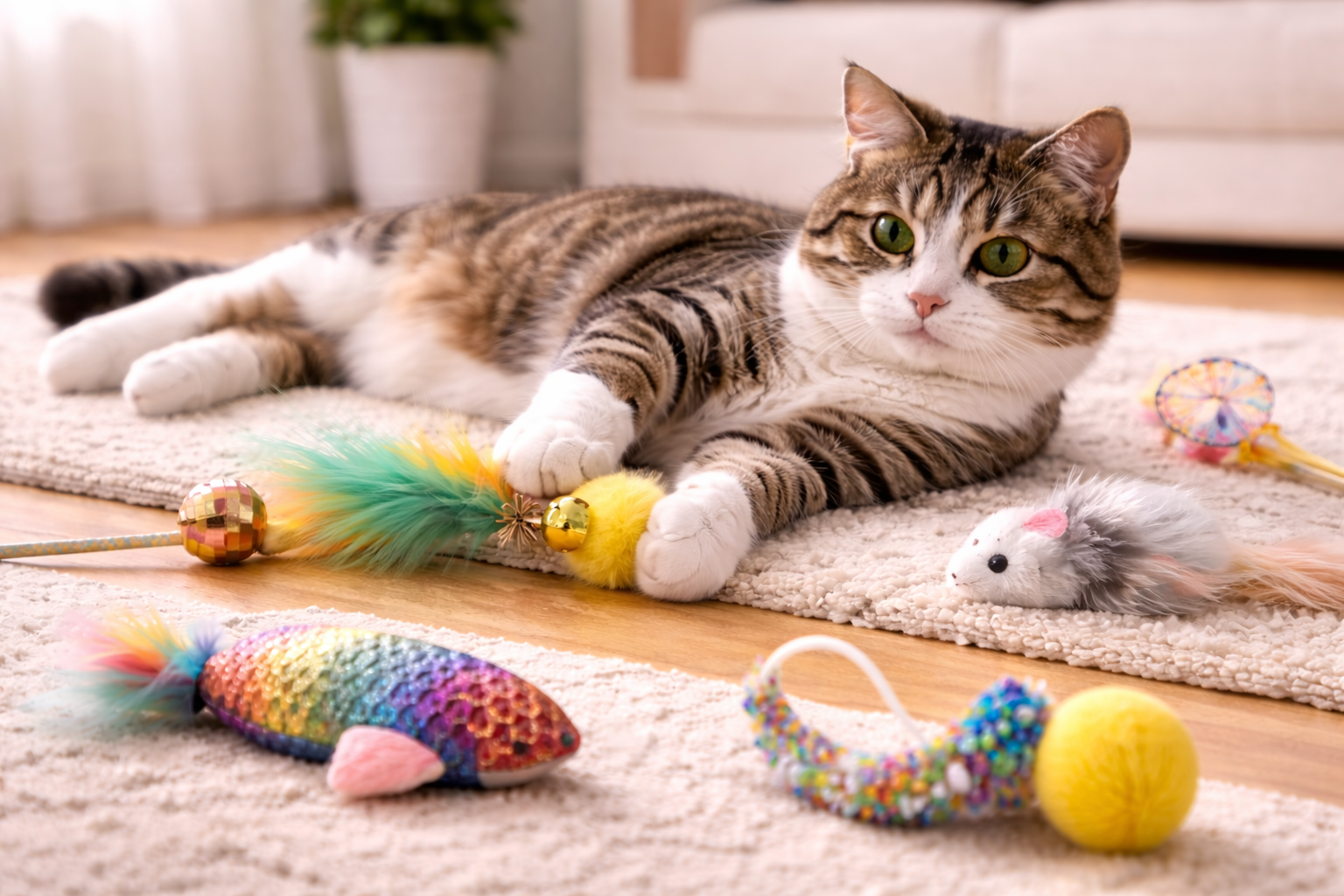
Cats are masters of efficiency. Their bodies are designed for quick reactions, precise movements, and short bursts of energy rather than sustained force. Because of this, many pet owners are discovering that toys requiring less effort to move often keep cats engaged longer. In everyday play, lightweight cat toys have proven to be especially effective at triggering natural hunting instincts while reducing frustration and fatigue.
Instead of relying on size or heaviness, these toys focus on responsiveness. A small paw tap, a gentle bite, or even a slight breeze can set them in motion. This immediate feedback creates a more realistic and rewarding play experience, particularly for indoor cats.
Cats interact with the world differently from dogs. They prefer objects that react instantly rather than resist movement. Lightweight cat toys align with this preference by offering minimal resistance and quick directional changes.
When a toy moves easily, cats are more likely to stalk, chase, and pounce repeatedly. Heavier toys, by contrast, may stop too quickly or feel unresponsive, leading to loss of interest. Lightweight designs allow play to flow naturally, keeping cats mentally engaged and physically active.
In the wild, prey is small, fast, and unpredictable. Lightweight cat toys replicate these characteristics by skittering across floors, fluttering through the air, or rolling unpredictably after a gentle touch.
This type of movement encourages core hunting behaviors such as tracking, timing, and coordination. Over time, regular interaction with lightweight toys helps indoor cats maintain agility and confidence, even in limited spaces.
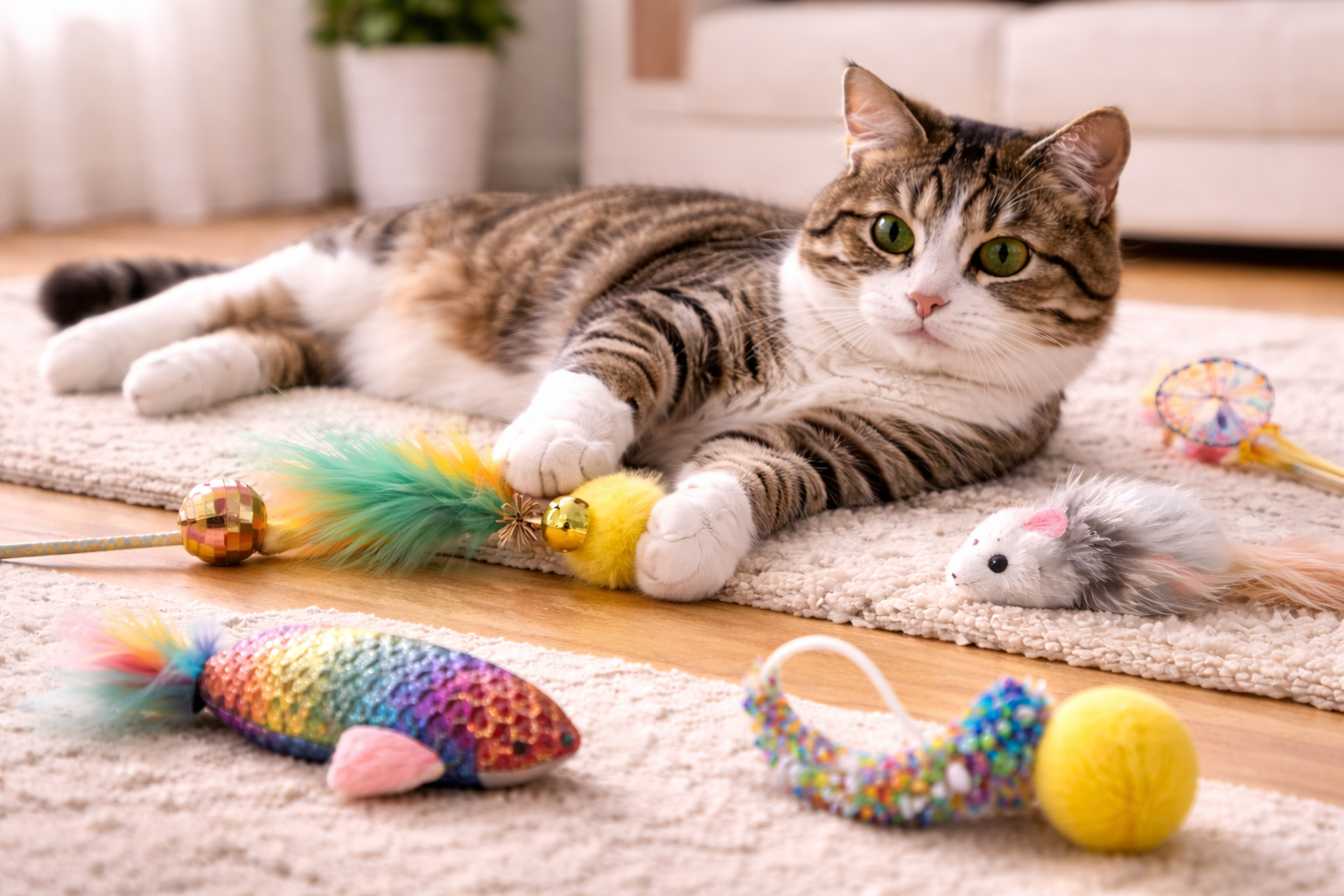 Benefits for Cats of All Ages
One major advantage of lightweight cat toys is their broad suitability. Kittens benefit from toys that move easily as they develop coordination and confidence. Adult cats enjoy the fast-paced interaction that keeps them mentally sharp.
Senior cats, who may have reduced strength or mobility, often prefer lightweight toys because they do not require excessive force. Gentle batting and short chases allow older cats to stay active without strain, supporting joint health and overall well-being.
Material choice plays a key role in keeping toys light while maintaining durability. Common materials used in lightweight cat toys include nylon fabric, felt, mesh, thin EVA foam, lightweight plastics, and crinkle film.
Many designs combine multiple materials to enhance sensory appeal without adding weight. For example, a soft felt body paired with a thin nylon tail can provide both tactile interest and lively motion. These combinations help sustain engagement while keeping the toy easy to manipulate.
Modern households often require toys that work both with and without human involvement. Lightweight cat toys excel in both scenarios. During interactive play, minimal wrist movement from an owner can create dramatic motion, making play sessions more enjoyable and less tiring.
For independent play, lightweight toys can be placed on smooth surfaces where cats can activate them on their own. This supports self-directed play throughout the day, especially for indoor cats left alone for extended periods.
Overly complex or heavy toys can sometimes overwhelm cats, leading to short play sessions or avoidance. Lightweight cat toys promote balanced play by allowing cats to control intensity and duration.
Because these toys respond easily, cats can engage in multiple short play sessions rather than one exhausting burst. This pattern aligns with natural feline energy cycles and contributes to calmer behavior and better rest afterward.
From a commercial perspective, lightweight cat toys offer several advantages. Reduced material usage lowers production costs, while lighter weight improves shipping efficiency and reduces transportation expenses.
Design flexibility is another benefit. Lightweight toys can be easily adapted into different shapes, themes, and color schemes without redesigning the core structure. This makes them ideal for private-label programs, seasonal collections, and replacement toy assortments.
Today’s pet owners are increasingly informed about feline enrichment. They understand that effective play depends on responsiveness rather than bulk. Lightweight cat toys meet these expectations by delivering visible engagement and longer-lasting interest.
As more consumers seek functional, enrichment-focused products, lightweight designs are becoming a staple in both mass-market and premium pet product lines.
Durability does not depend on heaviness. Well-designed lightweight cat toys maintain their function over time while remaining easy to use. This longevity reduces waste and supports more sustainable purchasing habits.
For cats, consistent access to responsive toys builds routine and confidence. For brands, it creates trust and repeat customers who recognize the value of thoughtful, cat-centered design.
Tel: Phone / WhatsApp: +86 13718368168
Email: Email: info@fukapets.com

 KR
KR JP
JP EN
EN