
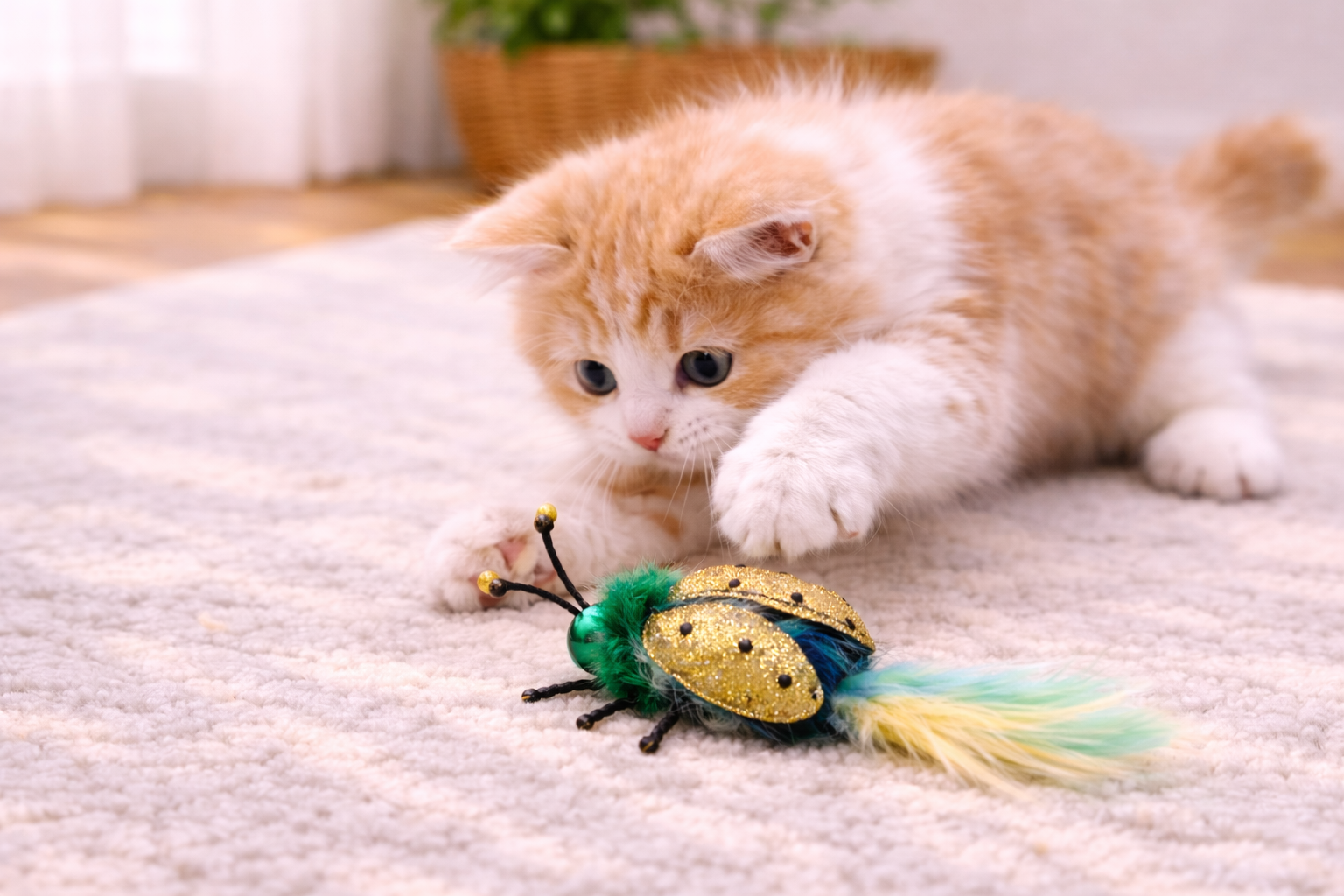
Indoor cats may enjoy comfort and safety, but without proper stimulation, their natural instincts can slowly fade. One of the most effective ways to reawaken these instincts is through prey-inspired toys that mimic real creatures cats would encounter in the wild. Among these designs, the Beetle cat toy stands out for its grounded, tactile, and highly engaging approach to feline play.
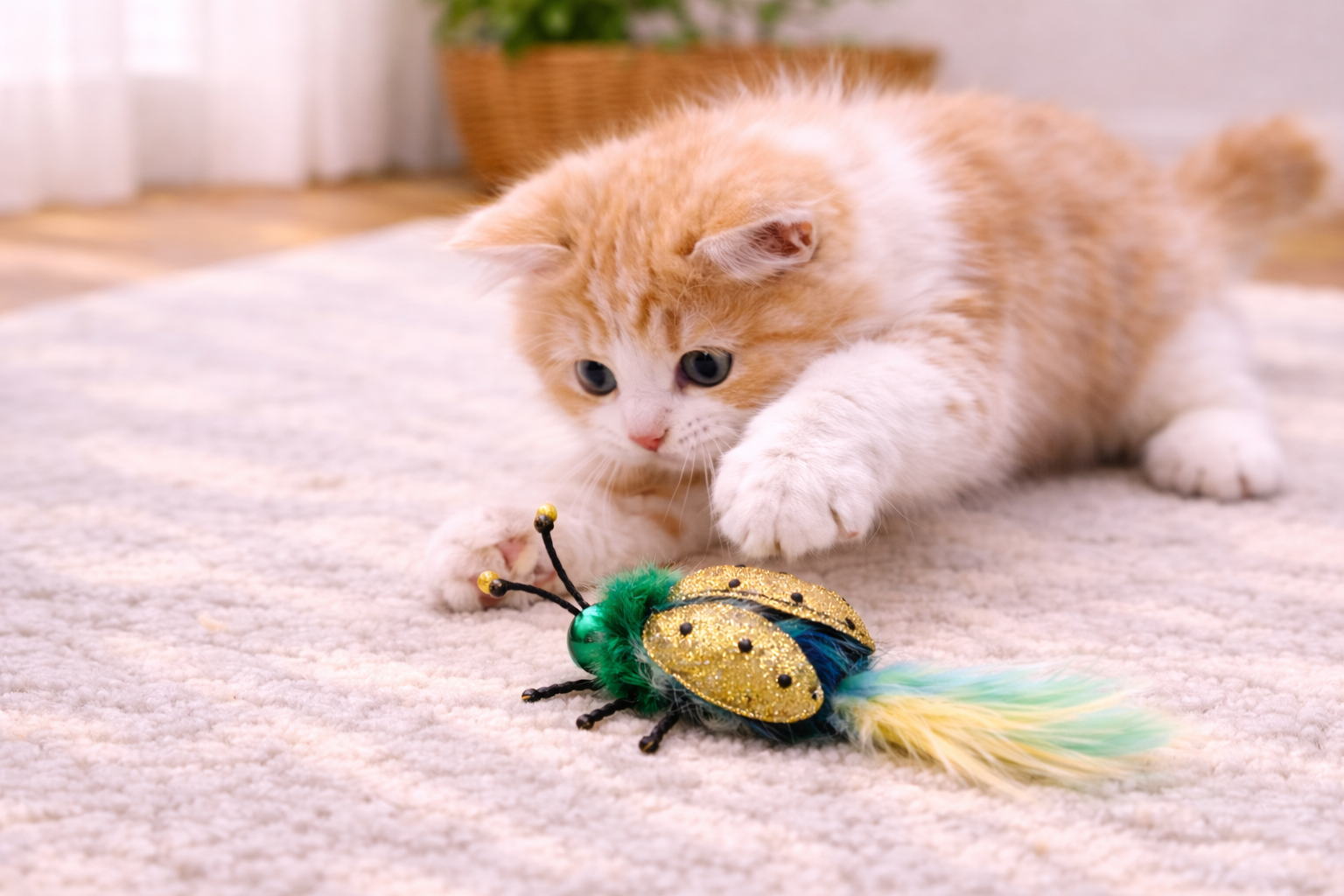
Rather than relying on airborne motion alone, beetle-inspired toys focus on crawling, scuttling, and unpredictable ground-level movement. This aligns perfectly with a cat’s instinct to stalk low-profile prey. When a cat encounters a Beetle cat toy, it often shifts into a focused hunting mode—lowered body posture, intense eye contact, slow stalking, and a sudden pounce—behaviors deeply rooted in feline evolution.
Beetles represent a unique category of prey in the animal world. They are small, fast, and unpredictable, often changing direction suddenly or stopping altogether. A well-designed Beetle cat toy recreates these characteristics through compact shapes, textured surfaces, and irregular motion.
Many beetle-style toys feature rounded bodies, segmented designs, or subtle protrusions that resemble legs or shells. These details create tactile feedback when cats bat, bite, or pin the toy. Unlike smooth balls that roll away quickly, a Beetle cat toy tends to wobble, pause, or change direction, keeping cats engaged for longer periods.
Cats are ambush predators. They are hardwired to stalk before they strike. A Beetle cat toy supports this behavior by staying close to the ground and moving in short, erratic bursts. This encourages cats to crouch, creep forward, and calculate their attack—behaviors that rolling or bouncing toys often fail to trigger.
This type of play is especially beneficial for cats that prefer low-energy but highly focused interaction. Senior cats, cautious cats, or cats that are easily overstimulated often respond better to beetle-style toys than fast-flying teasers.
 Physical and Mental Benefits of Beetle-Style Play
From a physical standpoint, a Beetle cat toy promotes controlled movement rather than explosive jumping. Cats use their shoulders, forelegs, and core muscles to pin, grab, and kick the toy. These motions help maintain muscle tone and joint flexibility without excessive strain.
Mentally, beetle-inspired toys require patience and strategy. Cats must observe subtle movements, predict direction changes, and time their attacks. This level of engagement supports cognitive health and reduces boredom-related behaviors such as furniture scratching or excessive sleeping.
Material choice plays a crucial role in the effectiveness of a Beetle cat toy. Soft rubber, felt, wool blends, EVA foam, or textured fabric are commonly used to replicate the “shell-like” feel of insects while remaining safe for biting and clawing.
High-quality designs avoid hard plastics or sharp edges. Instead, they use flexible materials that compress under pressure and rebound naturally. Reinforced stitching and secure internal construction are essential, as cats often grip beetle toys firmly during play.
Some versions incorporate subtle sound elements—such as gentle crinkle layers or internal rattles—to simulate the faint noises insects make when moving. These sounds are typically soft and irregular, adding sensory depth without overwhelming sensitive cats.
A Beetle cat toy works well in both solo and interactive play scenarios. When left on the floor, it serves as an independent play object that cats can discover and engage with throughout the day. When paired with a wand or elastic string, it becomes an interactive teaser that allows owners to guide movement while preserving realism.
This flexibility makes beetle toys suitable for enrichment routines, toy rotation systems, and multi-cat households. Cats can take turns stalking the toy, reducing tension and redirecting excess energy into positive behavior.
One of the biggest challenges in cat toy design is novelty loss. Cats often ignore toys once they become predictable. The Beetle cat toy counters this by offering varied interaction outcomes. A slight change in how it is pushed, dragged, or released can result in a completely different movement pattern.
Because beetle-style toys don’t rely on repetitive rolling or constant swinging, they feel less mechanical and more organic. This unpredictability is key to sustaining long-term engagement.
For cat owners seeking enrichment without electronics, batteries, or noise pollution, a Beetle cat toy is a practical solution. It supports instinct-driven play, fits easily into small living spaces, and requires minimal setup or maintenance.
From a product perspective, beetle toys are also highly adaptable. Different sizes, colors, textures, and attachments can be developed for kittens, adult cats, or specific play styles, making them ideal for product lines and private-label collections.
A Beetle cat toy goes beyond simple entertainment. By mimicking ground-dwelling prey, it taps into a cat’s deepest hunting instincts and encourages focused, satisfying play. Whether used for independent exploration or interactive sessions, beetle-inspired designs support physical health, mental stimulation, and emotional balance in indoor cats.
For cats that crave realistic, instinct-aligned play, beetle-style toys offer a powerful and enduring enrichment solution.
Tel: Phone / WhatsApp: +86 13718368168
Email: Email: info@fukapets.com

 KR
KR JP
JP EN
EN