
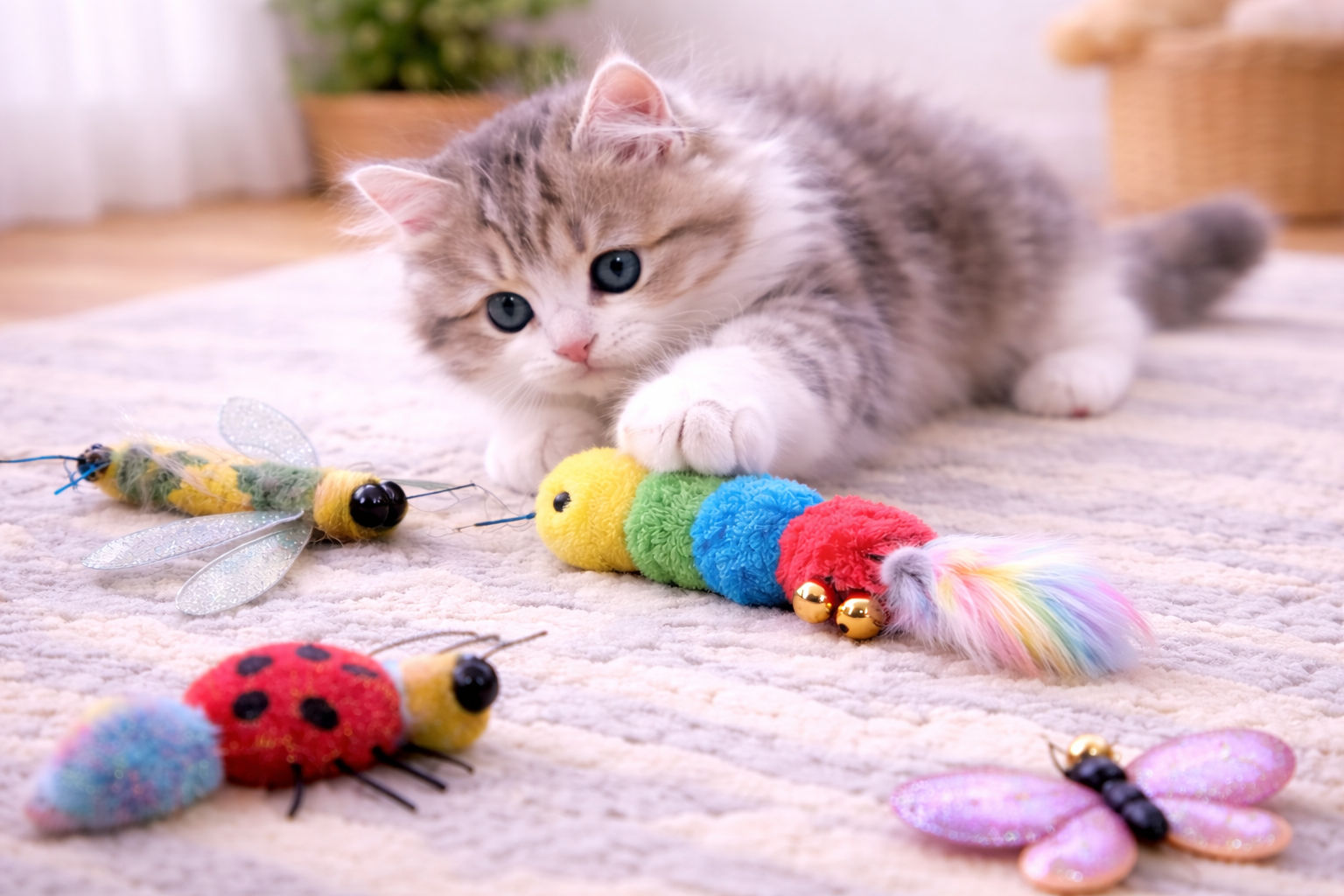
Cats experience their environment through a combination of sight, sound, and—most importantly—touch. While many toys focus on movement or noise alone, tactile feedback plays a decisive role in how long a cat remains engaged. This is why a well-crafted textured cat toy has become an essential part of modern feline enrichment, especially for indoor cats that rely on toys to replace natural hunting experiences.
Unlike smooth or uniform toys that quickly lose novelty, textured designs offer resistance, variation, and physical feedback with every interaction. When a cat paws, bites, or grips a textured cat toy, the surface reacts in subtle ways, keeping the experience dynamic rather than predictable.
Cats are highly sensitive to physical sensation. Their paws contain numerous nerve endings, and their whiskers are finely tuned to detect changes in surface and pressure. A textured cat toy takes advantage of this sensitivity by offering multiple tactile zones—soft, rough, flexible, or springy—that activate curiosity and encourage exploration.
In nature, prey is never smooth. Fur, feathers, shells, and exoskeletons all provide resistance and feedback when caught. Textured toys replicate this realism, allowing cats to perform instinctive behaviors such as gripping, kicking, and chewing in a safe indoor setting.
A key advantage of a textured cat toy is its ability to slow play down and deepen focus. Rather than simply batting an object away, cats often pause to feel the surface, adjust their grip, or reposition their paws. This promotes stalking, pinning, and controlled capture—core elements of natural feline hunting.
Cats that lose interest quickly in balls or flat plush toys often respond positively to textured designs because the interaction feels more “alive.” Each bite or paw movement produces a slightly different sensation, which extends play sessions and increases overall engagement.
 Texture and Movement: A Powerful Combination
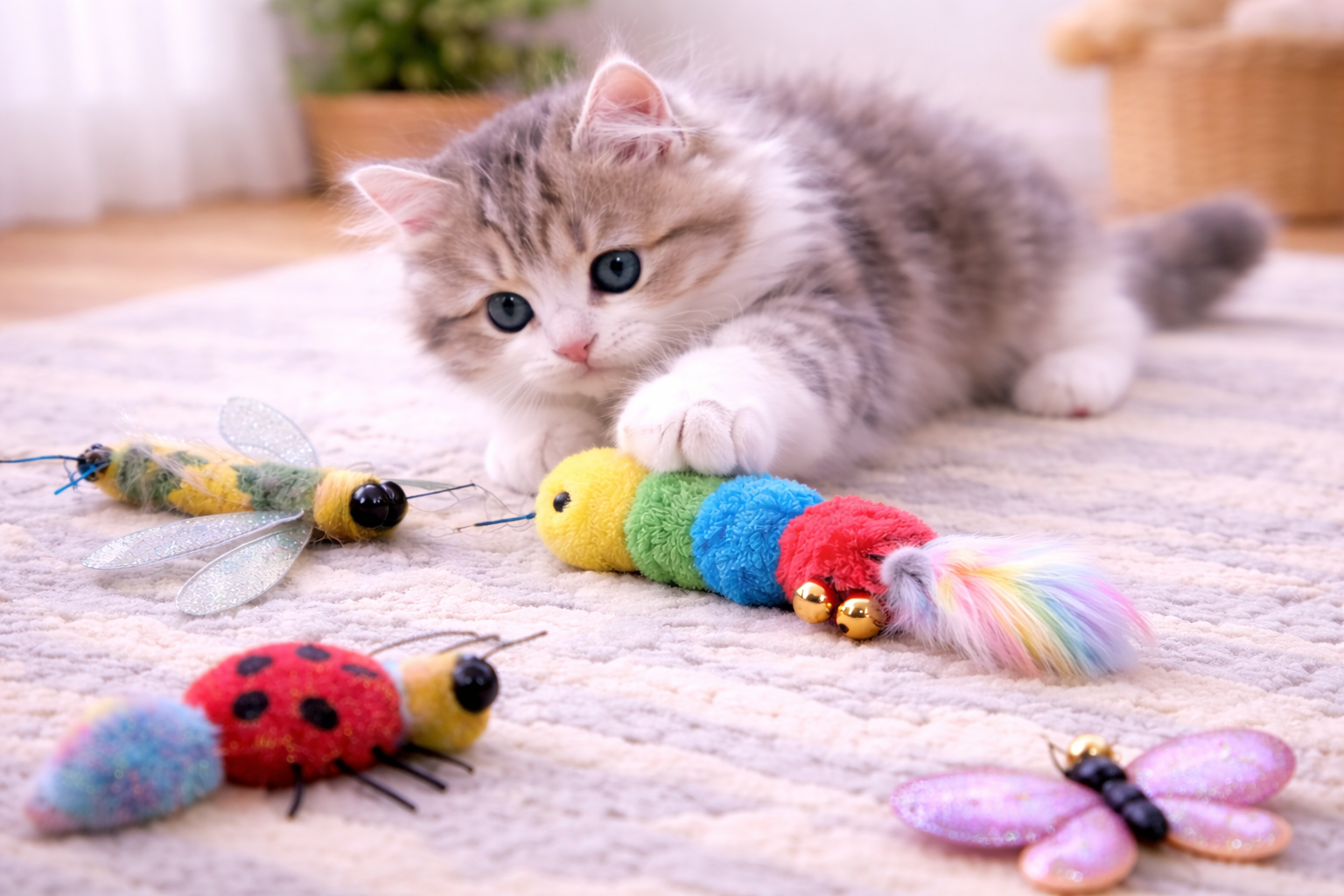
Texture becomes even more effective when paired with subtle movement. Many textured cat toy designs wobble, roll unevenly, or shift direction when pushed. The surface friction caused by texture prevents straight-line movement, creating unpredictable paths that keep cats alert.
This unpredictability triggers problem-solving behavior. Cats must track, anticipate, and adjust their movements, turning play into both a physical and mental exercise. Over time, this helps reduce boredom and destructive behaviors linked to under-stimulation.
Not all cats enjoy constant interactive play with humans. A textured cat toy is particularly valuable for independent play, allowing cats to engage on their own schedule. Because the toy reacts to touch rather than external control, cats can start and stop play whenever they choose.
This autonomy supports emotional well-being, especially for cats left alone during the day. Self-directed interaction helps release pent-up energy and reduces anxiety-related behaviors such as excessive vocalization or scratching.
From a physical perspective, a textured cat toy encourages full-body movement. Cats use their forelegs to grip, hind legs to kick, and core muscles to stabilize during play. These actions help maintain muscle tone, coordination, and joint flexibility.
For kittens, textured toys support motor skill development. For adult cats, they help maintain fitness. Even senior cats benefit from softer textured designs that offer stimulation without requiring high-impact movement.
Material choice is critical in any textured cat toy. High-quality designs use non-toxic, cat-safe materials such as felt, wool blends, soft rubber, EVA foam, or woven fabric. These materials provide tactile interest while remaining gentle on teeth and claws.
Durability is equally important. Reinforced stitching, secure bonding, and enclosed internal elements ensure the toy withstands repeated biting and kicking. A well-made textured toy maintains its structure and sensory appeal over time, increasing value for both cats and owners.
One of the biggest challenges in cat toy design is novelty loss. Cats quickly ignore toys that offer a single type of interaction. A textured cat toy addresses this problem by delivering sensory variety without changing the object itself.
Different areas of the toy may feel softer, firmer, or more flexible, encouraging cats to explore new ways of interacting. This layered experience helps maintain interest even after weeks of use, especially when toys are rotated periodically.
As pet owners become more informed about feline enrichment, demand for thoughtfully designed textured cat toy products continues to rise. These toys appeal to consumers seeking long-lasting value rather than disposable novelty items.
From a commercial perspective, textured toys offer strong customization potential. Variations in surface pattern, density, shape, and color allow brands to build cohesive product lines suitable for retail, private label, and wholesale markets.
A textured cat toy offers more than surface-level entertainment. By engaging a cat’s sense of touch, it creates deeper, more instinct-aligned play experiences that support physical health, mental stimulation, and emotional balance.
For indoor cats especially, tactile enrichment is not optional—it is essential. Choosing a well-designed textured toy can transform everyday play into a satisfying, long-lasting activity that keeps cats engaged and fulfilled.
Tel: Phone / WhatsApp: +86 13718368168
Email: Email: info@fukapets.com

 KR
KR JP
JP EN
EN