
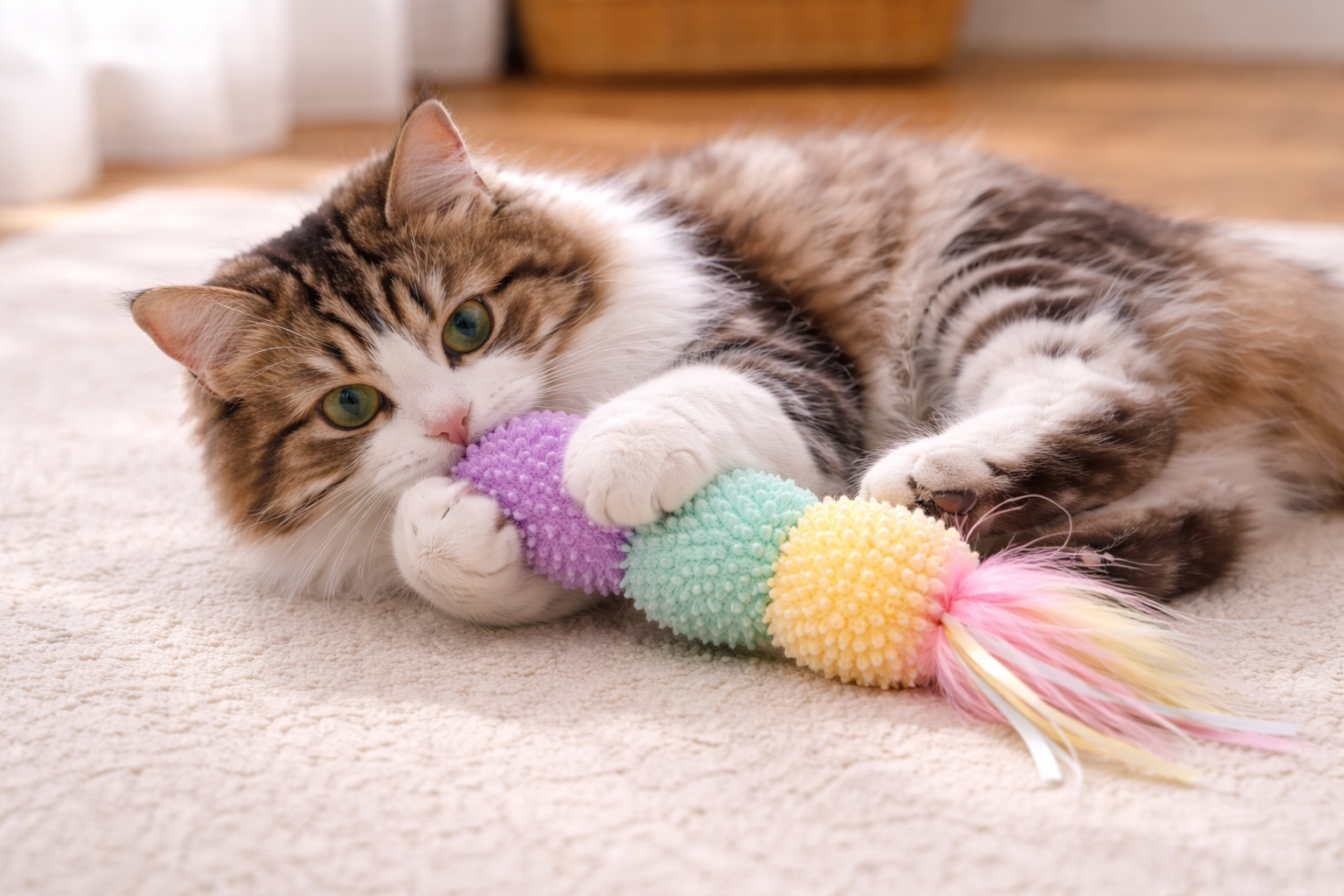
Modern indoor cats rely heavily on well-designed toys to meet their physical and mental needs. As living spaces become more compact and outdoor access more limited, enrichment tools play a critical role in maintaining a cat’s health and happiness. Among the many options available today, a textured cat toy stands out for its ability to engage multiple senses at once, making play more stimulating, natural, and rewarding.
Cats experience the world through touch as much as sight and sound. Whiskers, paws, and teeth are highly sensitive, allowing cats to detect subtle differences in surfaces and resistance. A textured cat toy takes advantage of this sensitivity by offering varied tactile feedback that smooth or rigid toys often lack. Each interaction feels different, encouraging curiosity and repeated play.
One of the key benefits of a textured cat toy is its ability to mimic natural prey sensations. In the wild, cats encounter fur, feathers, scales, and uneven surfaces when hunting. Toys with raised patterns, soft spikes, ridges, or layered materials recreate this complexity. When a cat bats, bites, or grips a textured surface, the resistance and feedback activate instinctive hunting behaviors, making play feel purposeful rather than repetitive.
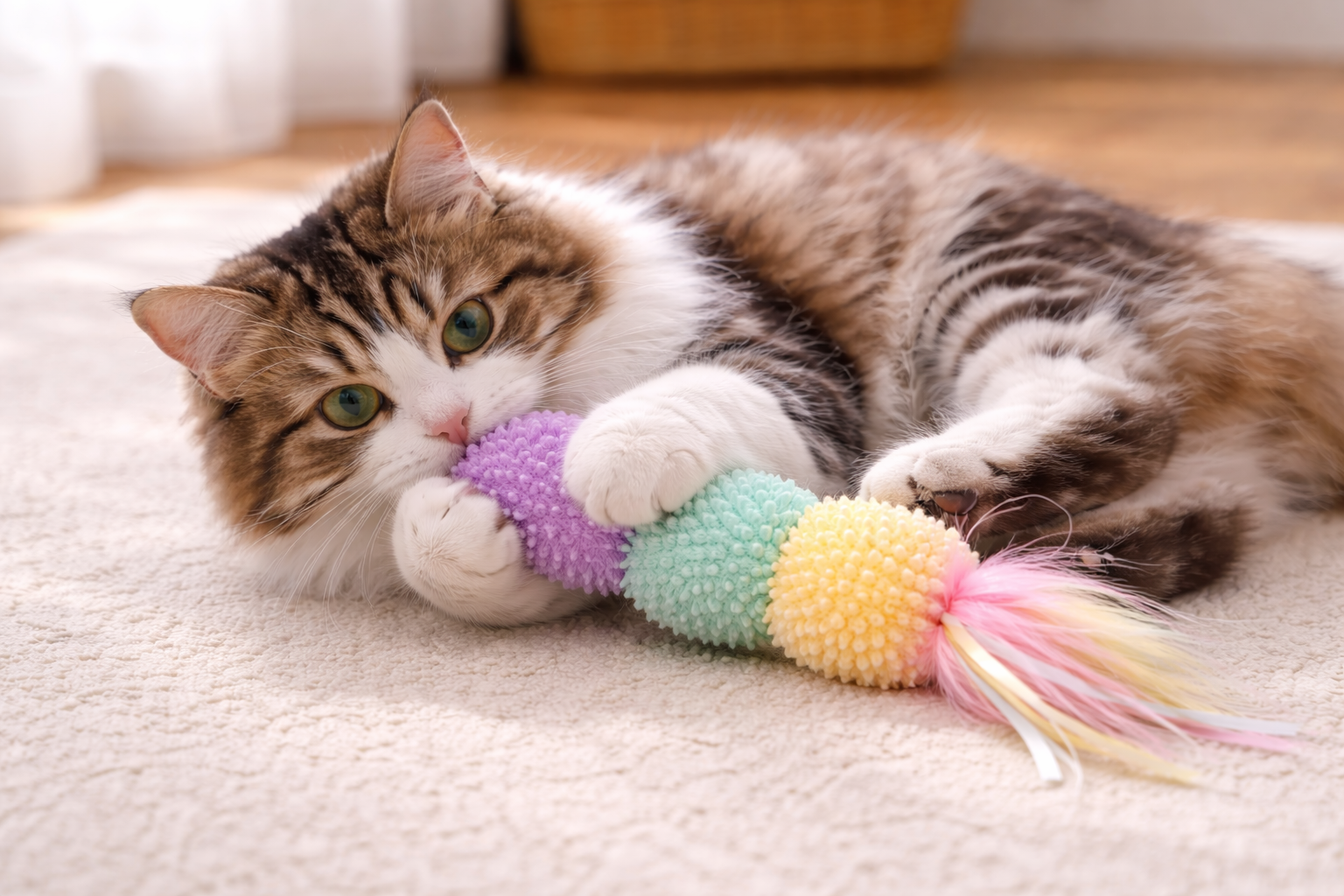 Movement becomes more engaging when texture is involved. A textured cat toy rarely rolls or slides in a predictable way. Instead, it changes direction slightly due to surface friction, which keeps cats alert and focused. This unpredictability is essential for maintaining interest, especially for cats that quickly lose enthusiasm for traditional balls or plush toys.
Independent play is another area where a textured cat toy excels. Many cats spend long hours alone while their owners are at work. Toys that stimulate touch and movement allow cats to entertain themselves without external input. A well-designed textured cat toy encourages spontaneous play sessions throughout the day, reducing boredom and stress-related behaviors.
From a physical health perspective, regular interaction with a textured cat toy supports exercise and muscle engagement. Reaching, pouncing, kicking, and carrying the toy all contribute to maintaining healthy weight and joint flexibility. For indoor cats prone to inactivity, textured toys offer low-impact movement that fits naturally into their daily routine.
Mental stimulation is just as important as physical activity. Cats are intelligent animals that require variety to stay engaged. The layered surfaces of a textured cat toy stimulate problem-solving and exploration, as cats experiment with different ways to interact. Over time, this helps prevent apathy and destructive habits often caused by under-stimulation.
Safety and comfort are also important considerations. Many textured cat toy designs use soft rubber, TPR, silicone, or fabric blends that are gentle on paws and teeth. Unlike hard plastic toys, these materials reduce the risk of injury while remaining durable enough for daily use. This makes textured toys suitable for kittens, adult cats, and senior cats alike.
In multi-cat households, a textured cat toy can help balance social dynamics. When each cat has access to engaging, independent toys, competition for attention decreases. Cats can choose when and how they play, supporting individual preferences and reducing stress within shared spaces.
From a market perspective, the textured cat toy category continues to grow as pet owners become more educated about enrichment. These toys are easy to customize in terms of material, shape, size, and color, making them ideal for private-label programs and wholesale distribution. Their simple construction often keeps production costs manageable while offering strong perceived value to consumers.
Maintenance and hygiene also favor textured designs. Most textured cat toy products are easy to clean and quick to dry, which is especially important for toys frequently handled or carried by cats. Easy maintenance encourages long-term use and improves overall satisfaction for pet owners.
Ultimately, the popularity of the textured cat toy lies in its balance of simplicity and effectiveness. It does not rely on electronics or complex mechanisms. Instead, it focuses on tactile engagement, natural movement, and instinct-driven play. This makes it a timeless enrichment tool that adapts well to different cat personalities and living environments.
As awareness of feline mental and physical health continues to rise, thoughtfully designed toys will remain essential. A textured cat toy is more than a plaything—it is a practical solution for enhancing daily life, supporting natural behavior, and strengthening the bond between cats and their environment.
Tel: Phone / WhatsApp: +86 13718368168
Email: Email: info@fukapets.com

 KR
KR JP
JP EN
EN