
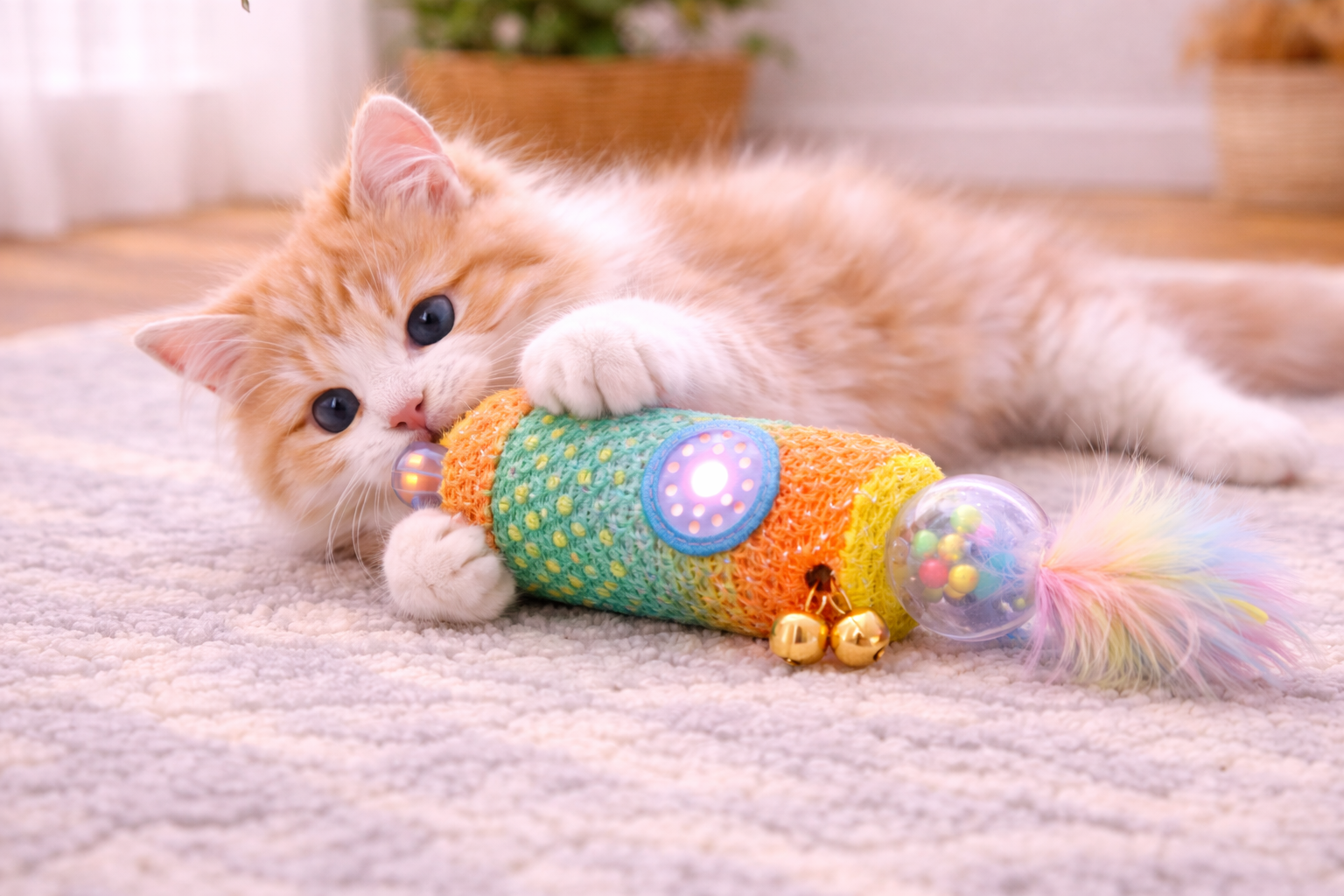
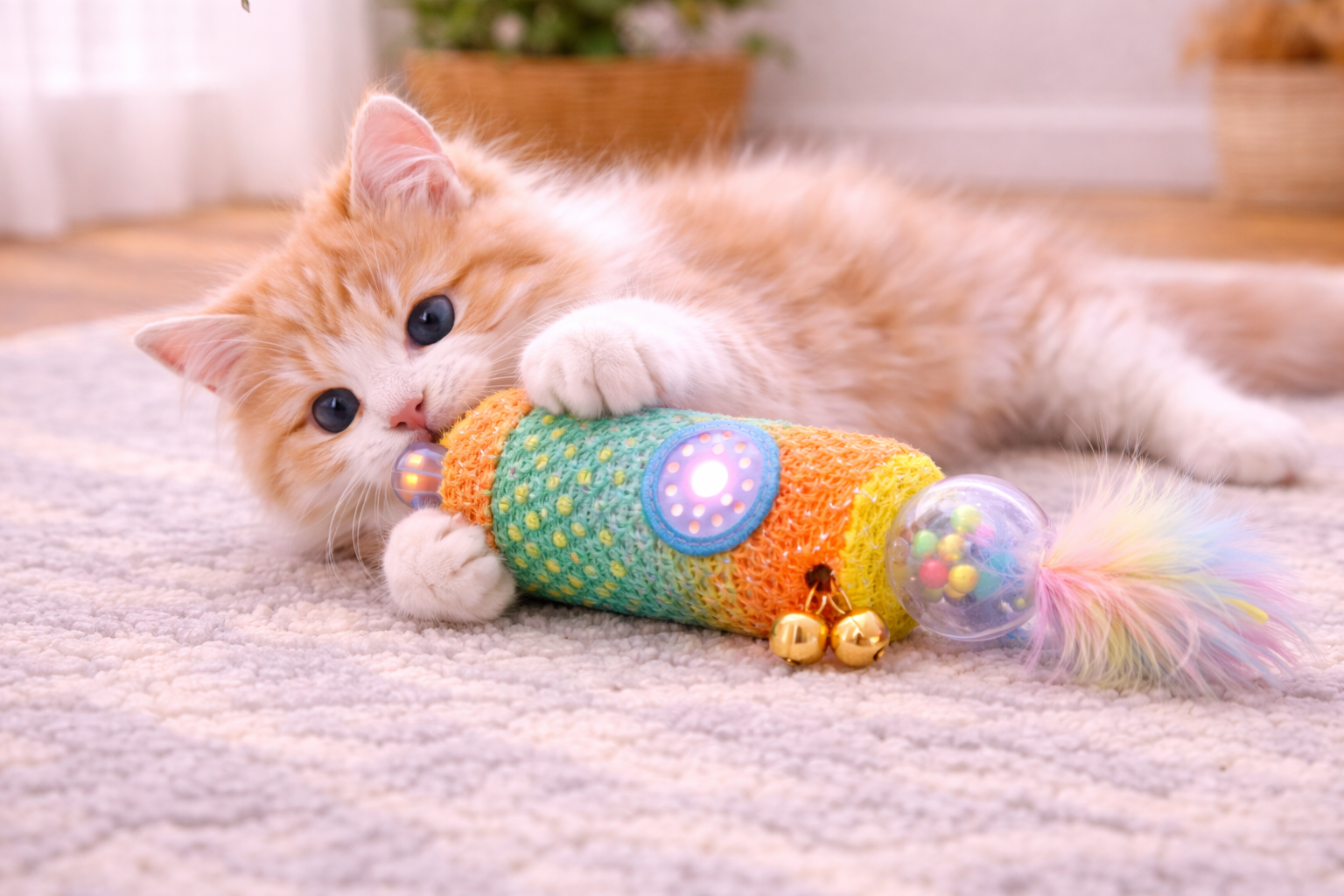
Indoor cats experience the world primarily through controlled environments, which often limits the variety of sensory input they naturally crave. While food and rest are essential, stimulation through play is equally important. Designed to activate touch, sound, sight, and movement, a sensory cat toy provides a richer, more meaningful play experience that supports both physical activity and emotional well-being.
Rather than focusing on a single function, sensory-based toys combine multiple stimuli to keep cats engaged longer. This layered interaction reflects how cats explore their surroundings in nature, where textures, subtle sounds, and unpredictable motion work together to trigger curiosity and hunting behavior.
Cats are highly sensory-driven animals. Their whiskers detect minute vibrations, their paws register texture differences, and their ears can pick up faint sounds humans often miss. A sensory cat toy leverages these abilities by offering varied feedback with every interaction.
Toys that include soft spikes, crinkle layers, feathers, or flexible components encourage cats to bat, grab, chew, and kick. Each action produces a different response, preventing play from becoming repetitive or dull. This is especially valuable for indoor cats that may otherwise lack environmental variety.
Texture is one of the most important elements in a sensory cat toy. Smooth toys often lose novelty quickly, while textured surfaces provide resistance and tactile feedback that feels more realistic. Materials such as felt, wool blends, soft rubber, mesh fabric, and crinkle paper are commonly used to stimulate a cat’s sense of touch.
When cats grip or bite textured toys, they experience a sensation similar to capturing prey. This tactile realism reinforces instinctive behaviors and encourages repeated play sessions over time.
Sound is another powerful sensory cue. Unlike loud bells that can overstimulate or annoy cats, a well-designed sensory cat toy uses subtle audio feedback. Crinkle sounds, soft rattles, or faint rustling noises mimic the sounds of insects or small animals moving nearby.
These gentle sounds immediately draw attention without causing stress, making sensory toys suitable for both energetic play and quieter indoor environments. Cats often remain focused longer when sound is unpredictable rather than constant.
 Visual Movement and Unpredictability
Visual stimulation completes the sensory experience. A sensory cat toy often incorporates elements that flutter, wobble, or change direction slightly when touched. These irregular movements activate a cat’s prey drive by mimicking the behavior of living creatures.
Unpredictable motion encourages stalking, pouncing, and tracking—key components of natural feline play. Even cats that ignore static toys frequently respond to visually dynamic sensory designs.
One of the strengths of a sensory cat toy is its versatility. Many designs work well for independent play, allowing cats to engage on their own throughout the day. This is especially helpful for cats left alone for long hours, as it reduces boredom and anxiety.
At the same time, sensory toys can be incorporated into interactive play sessions with owners. Tossing, dragging, or gently flicking the toy enhances movement patterns and strengthens the human–cat bond.
Regular interaction with a sensory cat toy promotes movement, coordination, and muscle engagement. Cats stretch, twist, and pounce in ways that support joint health and weight management. This is particularly important for indoor cats with limited space.
Mentally, sensory-rich play challenges cats to process multiple inputs at once. Tracking movement, reacting to sound, and responding to texture keeps the brain active, reducing stress-related behaviors such as excessive grooming or destructive scratching.
Because sensory toys are often used unsupervised, safety is essential. High-quality sensory cat toy designs avoid sharp edges, toxic materials, or easily detachable small parts. Soft yet durable materials ensure the toy withstands biting and clawing while remaining gentle on teeth and paws.
Secure stitching and enclosed sound elements help prevent damage during vigorous play. Regular inspection and rotation also help maintain safety and novelty.
As awareness of feline enrichment increases, the sensory cat toy category continues to expand. Pet owners are increasingly seeking toys that support mental health rather than simple novelty. Sensory-focused designs align perfectly with this demand.
From a commercial perspective, sensory toys offer excellent customization potential. Variations in texture, sound, shape, and color allow brands to create distinctive product lines suitable for private-label, wholesale, and enrichment-focused collections.
A sensory cat toy is more than a plaything—it is an enrichment tool designed to engage a cat’s natural instincts on multiple levels. By combining touch, sound, and movement, it creates a dynamic experience that supports physical health, mental stimulation, and emotional balance.
For modern indoor cats, sensory-driven play is not a luxury but a necessity. Choosing the right sensory cat toy can transform daily routines into engaging, instinct-aligned experiences that keep cats happy, active, and fulfilled.
Tel: Phone / WhatsApp: +86 13718368168
Email: Email: info@fukapets.com

 KR
KR JP
JP EN
EN