
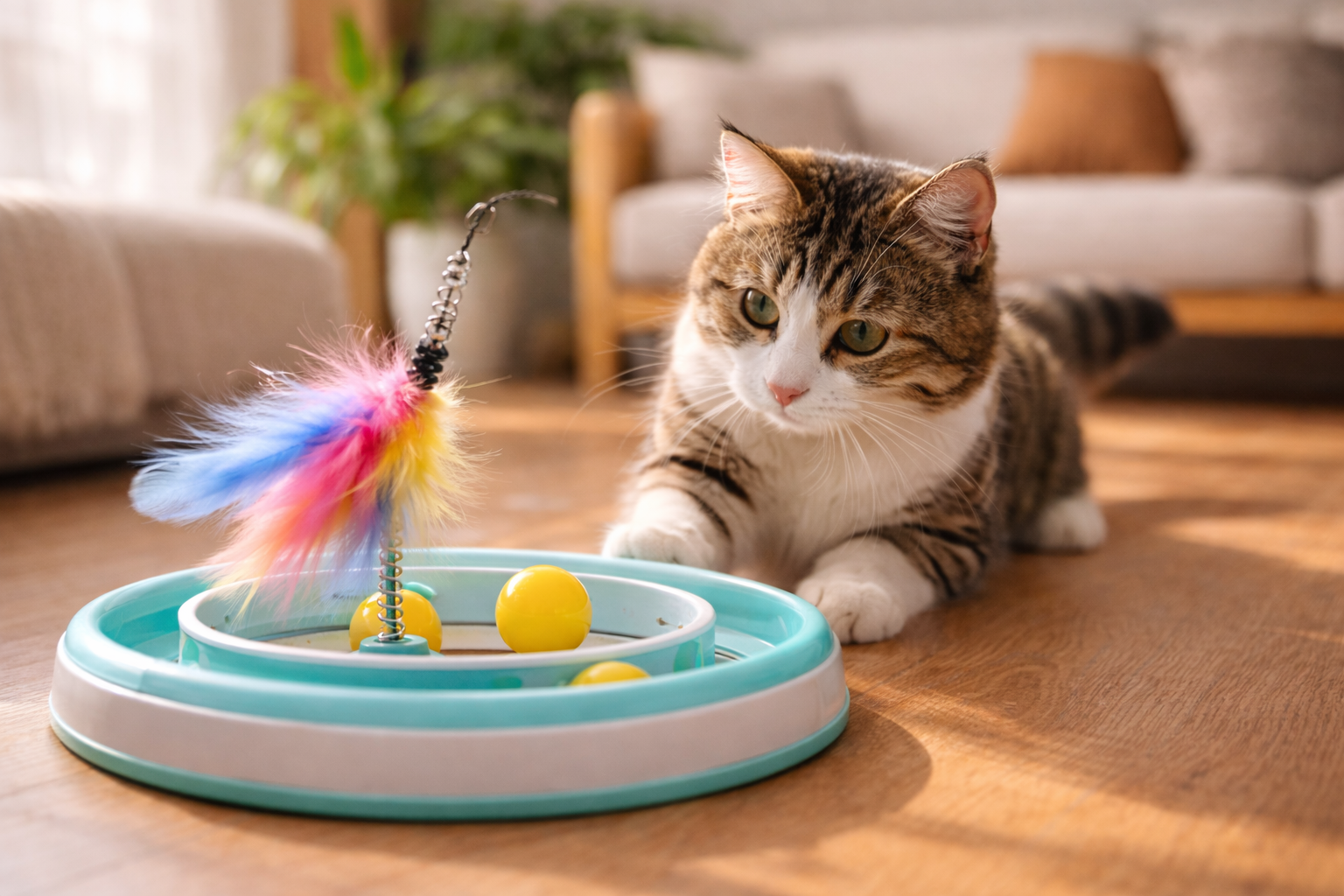
This in-depth guide explains how the ring self play cat toy fits into modern indoor cat care, focusing on functionality, usage scenarios, and long-term enrichment value.
In many households, cats spend long hours alone while their owners work or travel. During this time, lack of stimulation can slowly affect behavior, health, and mood. While interactive toys are effective, they are not always available. This reality has increased demand for toys that support independent engagement, and the ring self play cat toy has become one of the most practical solutions for this need.
Instead of depending on human involvement, this toy functions as part of the cat’s environment, offering consistent access to play.
At its core, a ring self play cat toy is designed around continuous motion within a circular structure. The ring shape allows objects—such as balls or rollers—to move endlessly when touched, encouraging repeated interaction.
This closed-loop design prevents the toy from rolling away or getting lost, making it ideal for indoor spaces. It also ensures that the play experience restarts instantly every time the cat interacts with it.
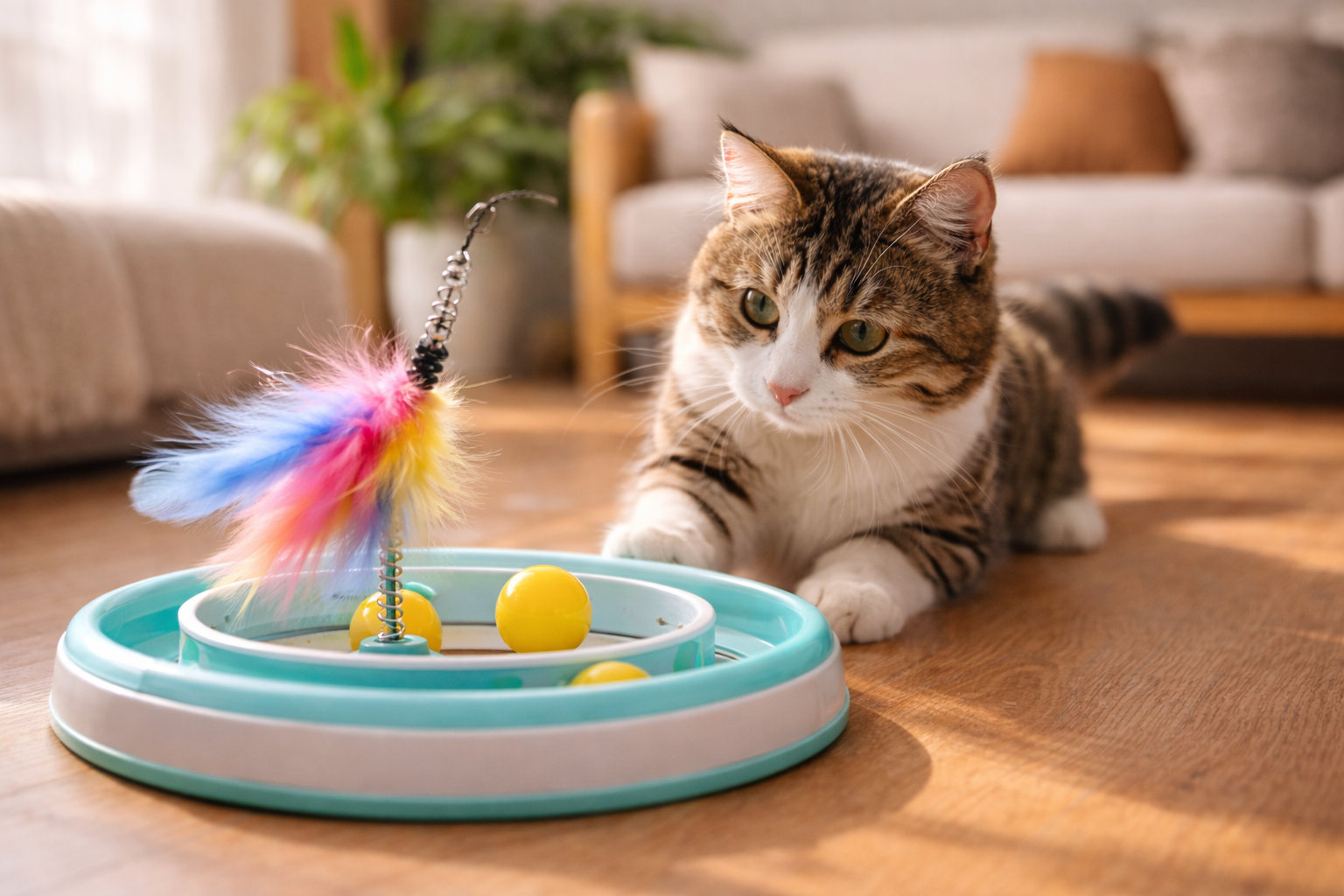 Movement Mechanics and Cat Engagement
Cats are drawn to motion that feels alive but unpredictable. The ring self play cat toy achieves this by responding directly to the cat’s actions. Each paw strike changes speed and direction slightly, creating variation without complexity.
This cause-and-effect relationship keeps cats engaged longer than static toys. Because the movement is self-generated, cats remain mentally involved rather than passively observing.
One advantage of the ring self play cat toy is its adaptability to different living environments. In apartments, it provides stimulation without noise or large space requirements. In houses, it can be placed in common areas where cats naturally pass through.
It is especially effective during early mornings or late nights when cats are most active but owners may be unavailable. Over time, cats often incorporate the toy into their natural routines.
Not all cats respond well to structured exercise. Some avoid wand toys or lose interest quickly. The ring self play cat toy allows cats to control intensity and duration.
Short bursts of batting, stalking, and circling contribute to daily movement without overwhelming the cat. This type of low-pressure activity supports joint health and muscle maintenance, particularly for indoor cats.
Mental stimulation is just as important as physical movement. The ring self play cat toy offers repetitive yet engaging interaction that helps reduce stress and anxiety.
Because the toy does not overstimulate, cats can step away and return at will. This sense of control supports emotional stability and can reduce unwanted behaviors linked to frustration or boredom.
Traditional interactive toys often require time and effort from owners. While effective, they are not always practical. The ring self play cat toy fills a different role.
Rather than replacing human interaction, it complements it. Owners can still engage in direct play when available, while the toy ensures continued stimulation during downtime.
The ring self play cat toy is suitable for a wide range of cats. Kittens benefit from developing coordination and curiosity. Adult cats use it to release energy. Senior cats can engage gently without strain.
In multi-cat households, the toy reduces competition for attention and provides neutral enrichment accessible to all cats.
From a practical standpoint, the ring self play cat toy offers long-term value. Its simple design means fewer parts that can break, and its enclosed structure improves safety.
Because it does not rely on batteries or electronics, maintenance is minimal. This makes it a reliable, low-cost enrichment option over time.
The ring self play cat toy is not a novelty item—it is a functional part of modern indoor cat care. By supporting independent play, it addresses the realities of busy households while respecting natural feline behavior.
Integrated thoughtfully into a cat’s environment, this toy promotes movement, mental engagement, and emotional balance. Sometimes, the most effective solutions are also the simplest.
Tel: Phone / WhatsApp: +86 13718368168
Email: Email: info@fukapets.com

 KR
KR JP
JP EN
EN